

DWN at Weavers Meet by Wearable Senses Lab TU/e

by admin
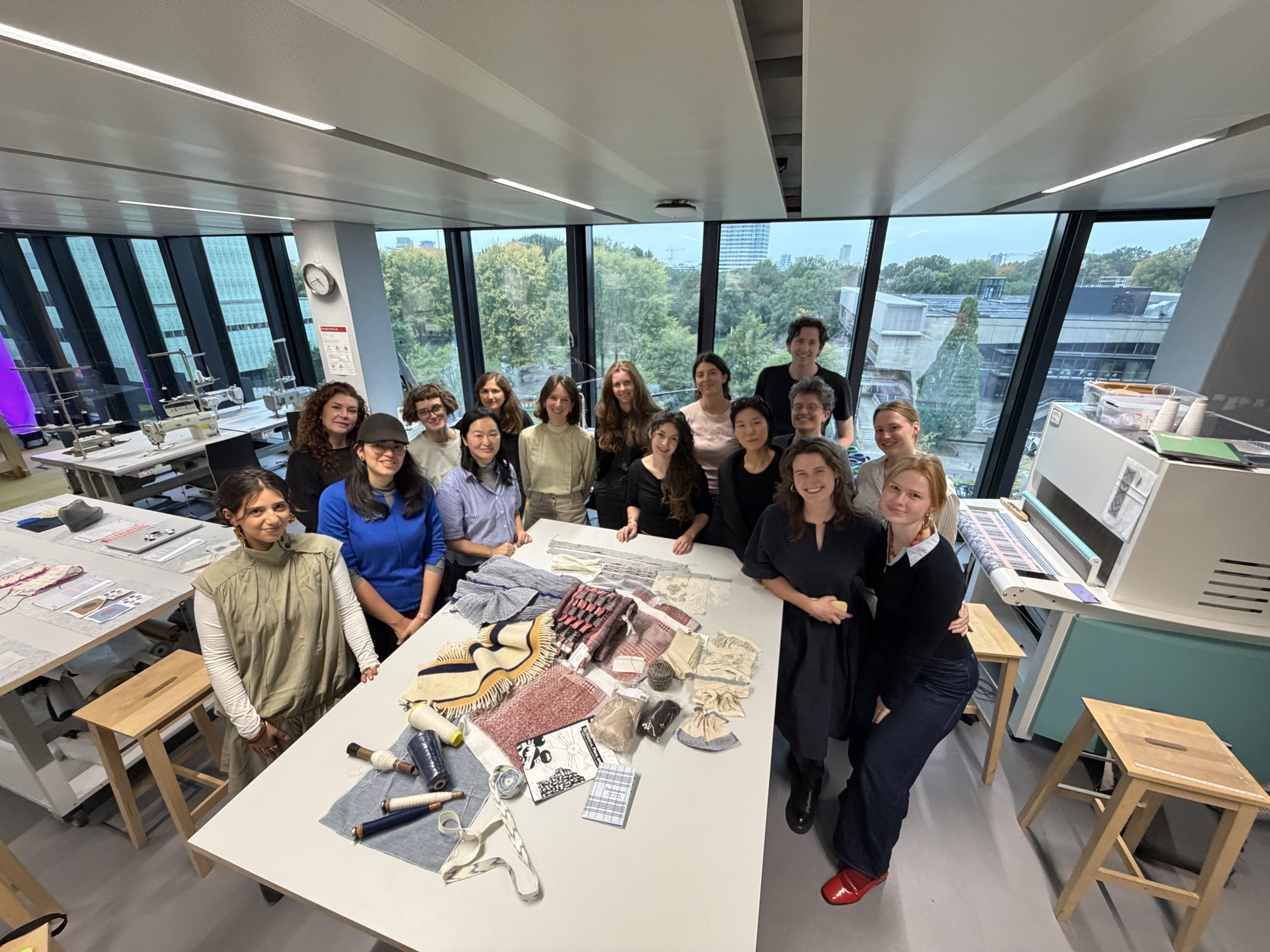
Digital Weaving Norway visited Dutch Design Week, taking place from October 17 – 25 in Eindhoven, the Netherlands. During our visit, we joined the Weavers’ Meet-up organised by the Wearable Senses Lab at Eindhoven University of Technology (TU/e).
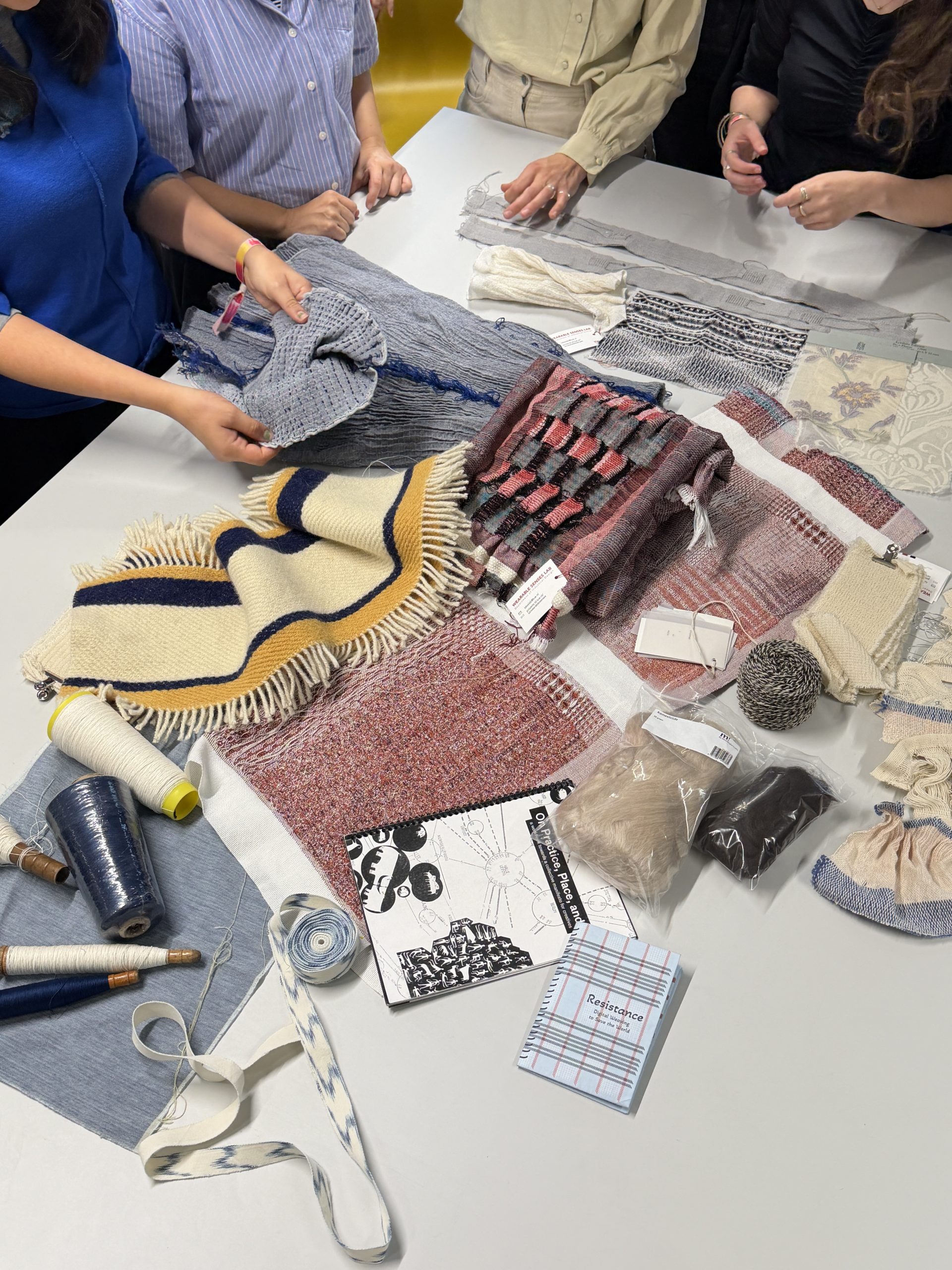
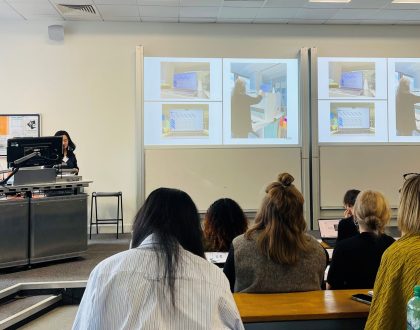
The meet-up brought together a small group of textile enthusiasts, mostly from academia, based in and around the Netherlands. Participants were invited to bring a sample or two as a starting point for informal conversations about their current work with weaving and opportunities to support one another or collaborate. The session was led by Kristina Andersen, Associate Professor in the Department of Industrial Design at TU/e.
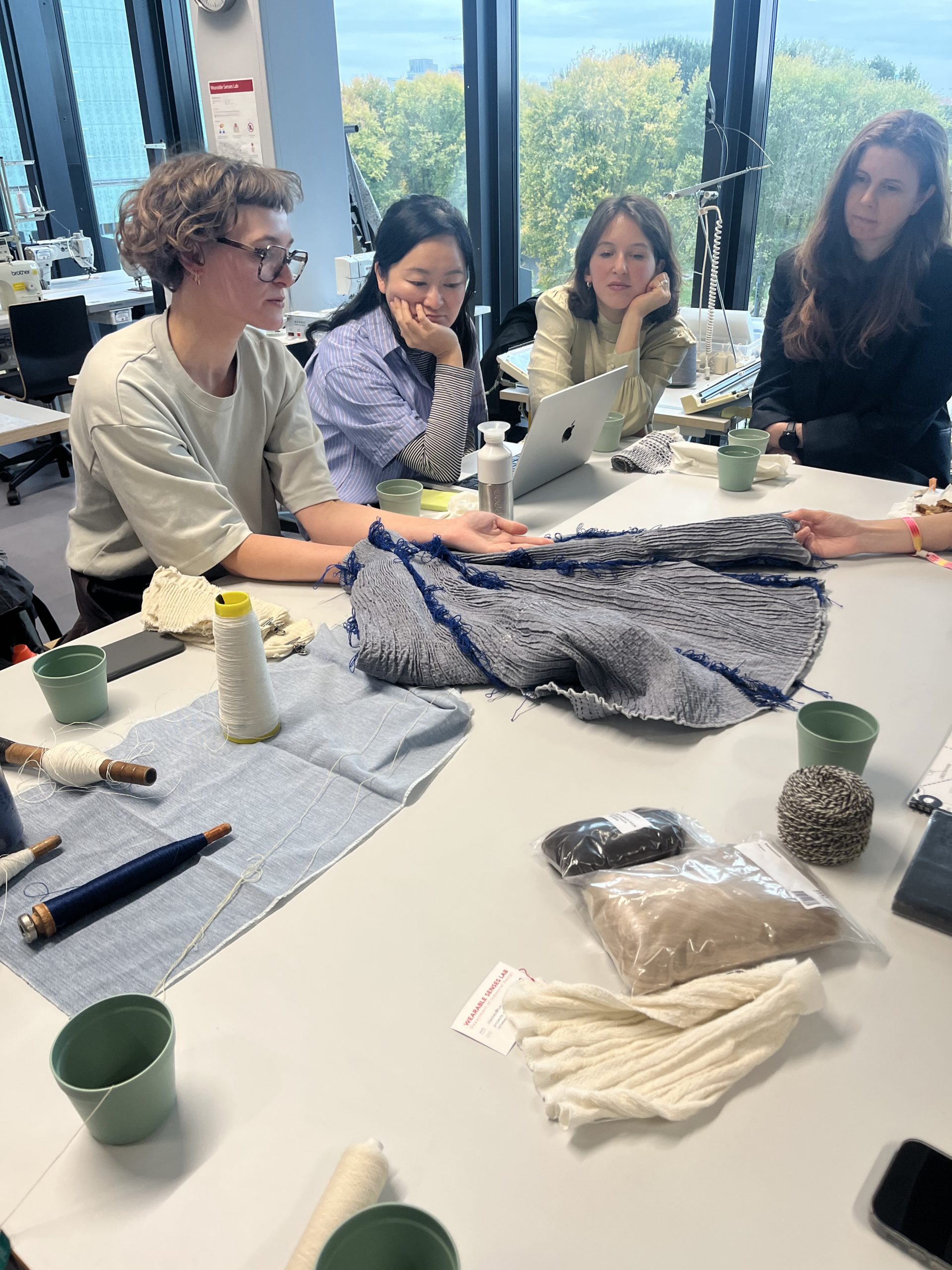
We also got a demonstration of LOOMING – a customised TC2 control software interface – by Helen Milne, one of the meet-up participants and a member of its development team. LOOMING translates traditional shaft loom logic into a digital, interactive weaving draft, creating a space for hands-on exploration while drawing on the rich weaving knowledge rooted in shaft loom practice.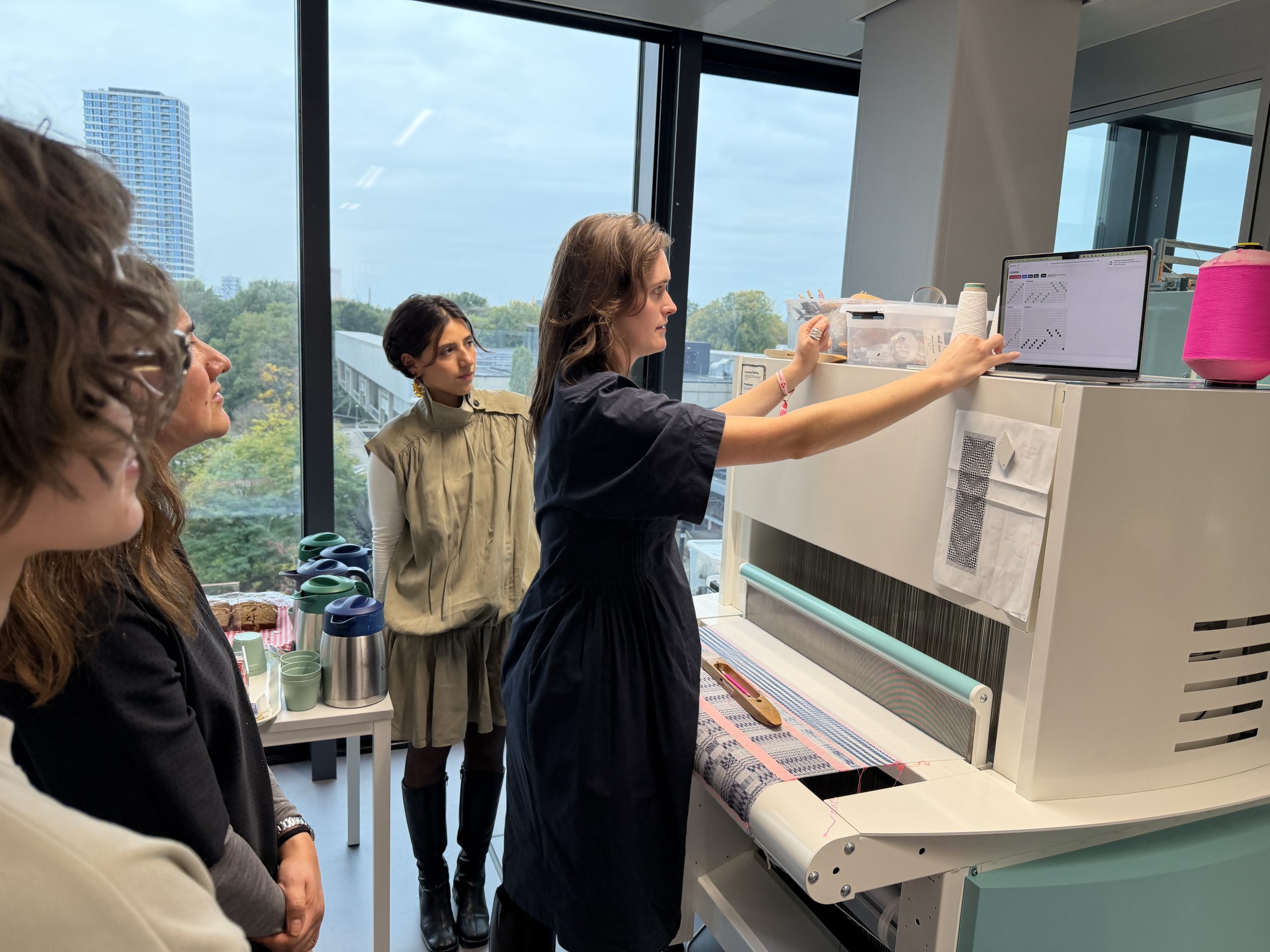
During our visit, we also caught up with Femke Vorselen, a researcher and designer at TU/e’s Wearable Senses Lab, to learn more about her own work and the ideas taking shape at the Wearable Senses Lab. Here’s our conversation:
1. Are there any new materials that you exploring at the Wearable Senses Lab? What interests you about their properties and what possibilities do they offer?
A new material that is being explored is the Liquid Crystal elastomer fiber that PhD student Ciccy Lyu is using for her research on designing soft systems for interactive design. The material is heat-responsive and will shape change when it is being exposed to the heat. Ciccy is weaving with the elastomer fiber and made already super interesting fabrics.
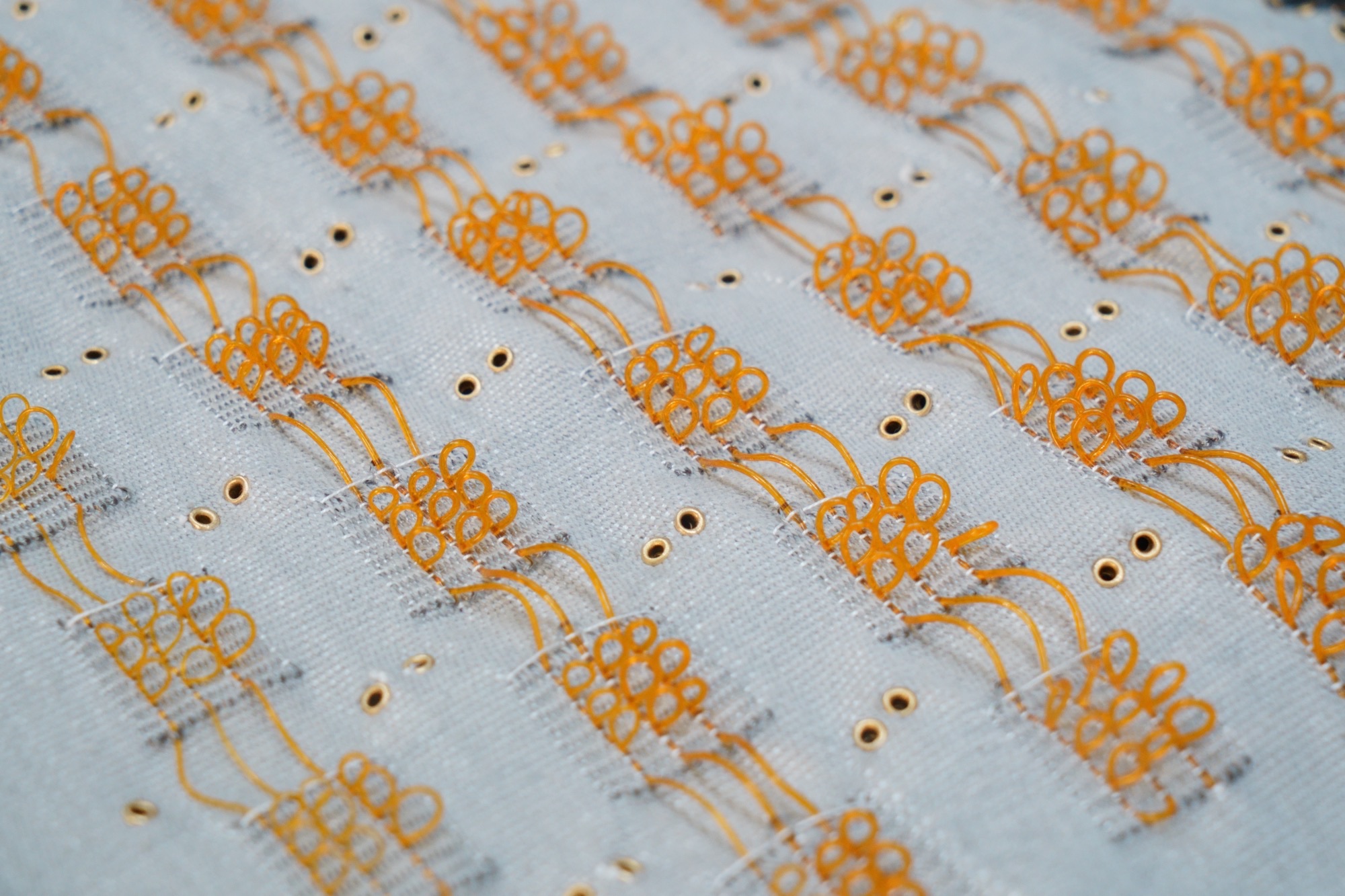
(Below is an image of liquid crystal elastomer fiber woven on the TC2. Titled PluShe, the interface comprises a 6 × 6 grid of individually addressable, texture-changing pixels. By Ciccy Lyu, Miguel Bruns, Albert Schenning, Xue Wan and Amy Winters.)
2. Could you share an example of how you play with textile structures to create new properties or behaviours? Can the textile structure itself become the technology?
This makes me think immediately of Oscar Tomico’s research Crafting Bioreceptive Textiles for Plant-Human Interaction. For this project, I am developing textiles that can be integrated into interior spaces and that allow climbing plants to grow on them.
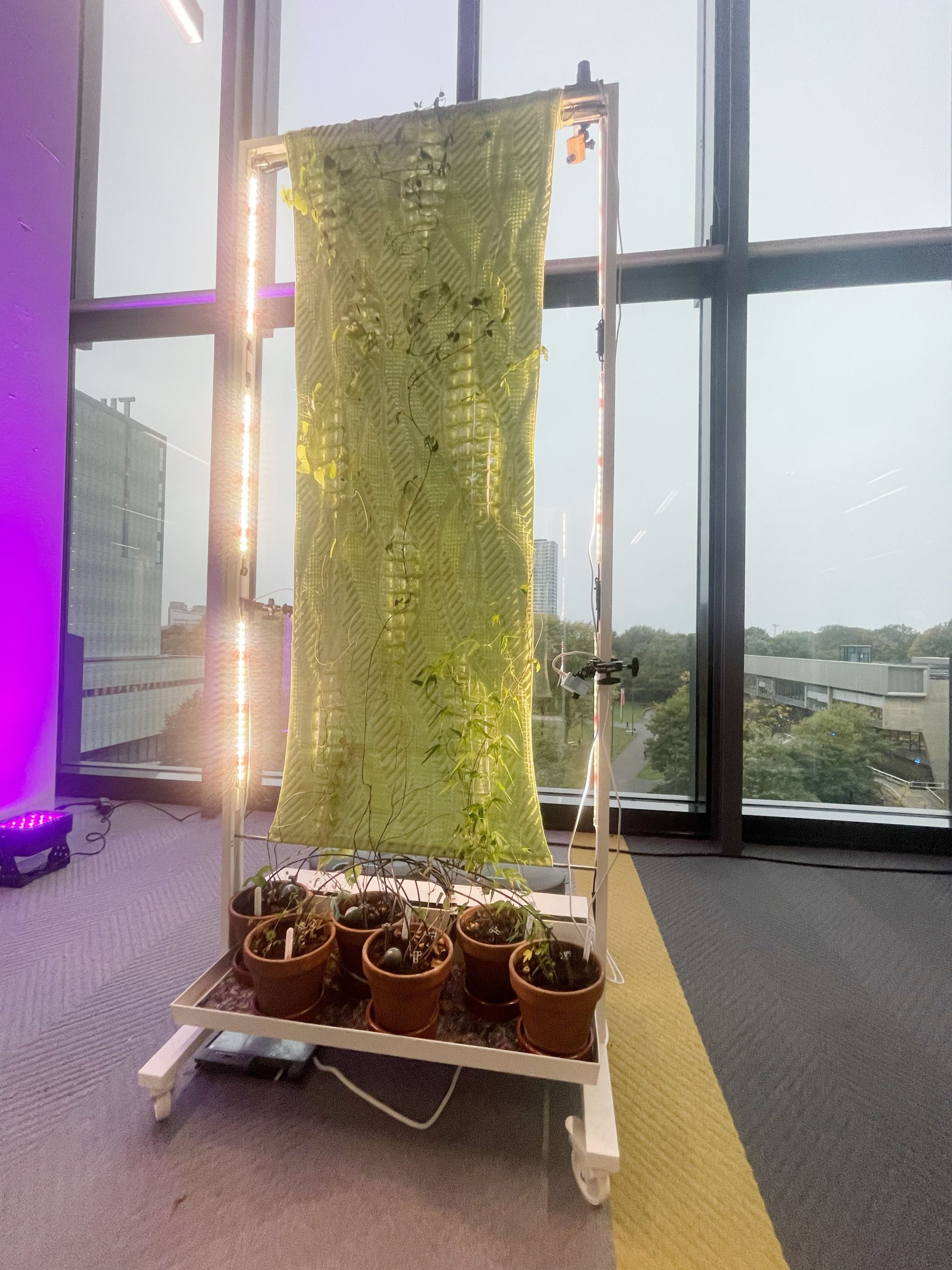
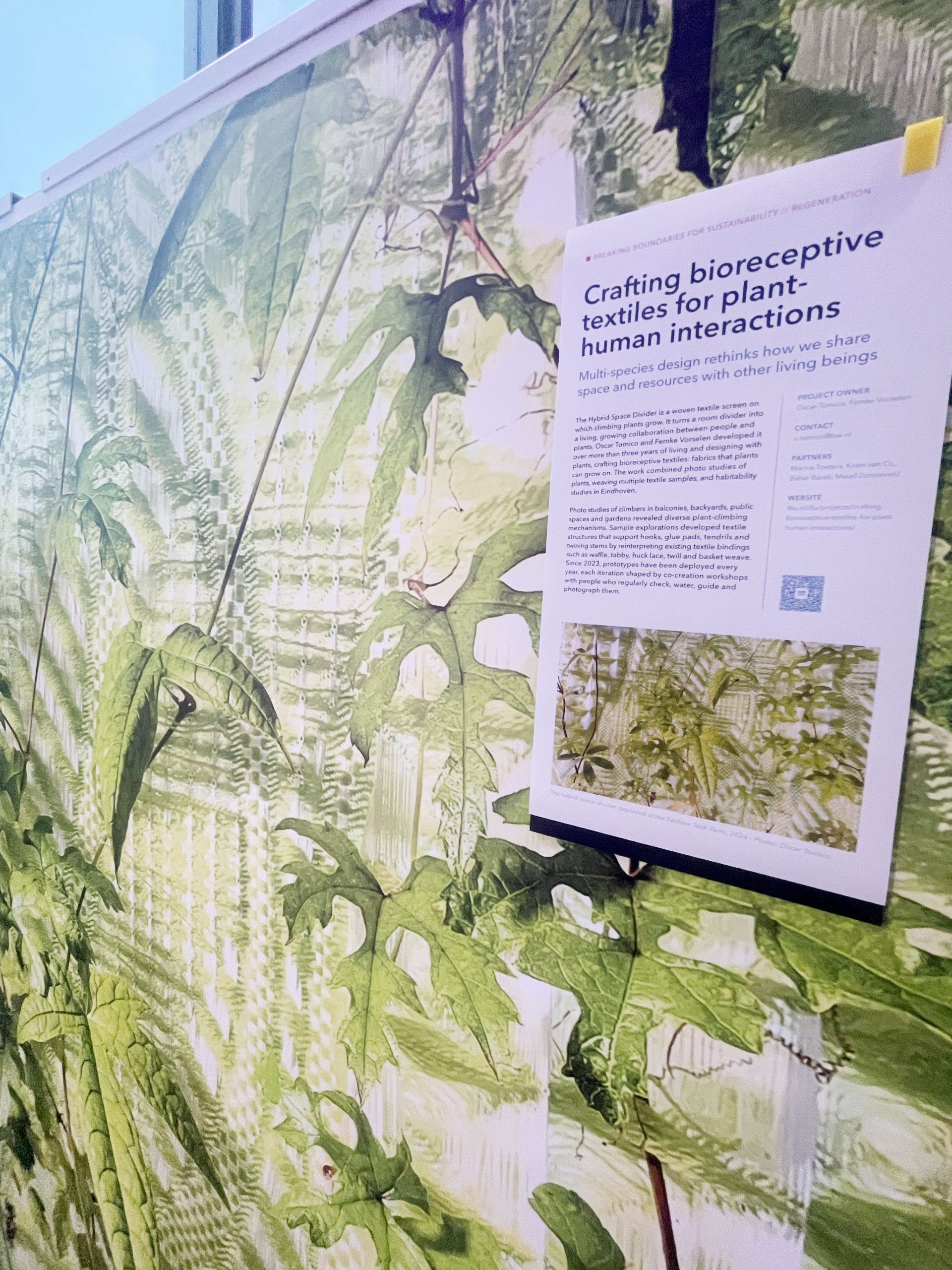
We are working together with four different climbing plants and have collected data on how they grow and climb on existing structures in both natural and urban environments, including nature supporting itself as man-made structures. Before every new textile prototype as for every sample during the process, we first had to consider what would make it suitable for the plants. Our focus was therefore primarily on the bindings and how we could optimize them to support the plants’ climbing.
What started as a translation of existing structures and textures into textiles gradually developed into a broader exploration of new bindings. Starting to explore bindings that would create a more open textile while also keeping its stability. Now, with our third prototype, we took it a step further into the pattern of the textile where the bindings would transit into each other.
This makes me think of what technology can be, especially within textiles. I tend to think it is something that needs to be added or is in some form of digital/ electronic, but this project makes me believe it can emerge from the structure itself.
3. How does the experience of touching, wearing and moving with a textile influence your design process? What do you learn through hands-on sampling and testing that might be difficult to predict through digital design alone?
For me, experiencing a textile in its entirely is often one of the most important aspects in my design process. Touching, wearing and moving go beyond the visual appearance, whether it is digitally or physically. Through that physical interaction, I can experience the weight, texture, and many other qualities that help me to develop a deeper understanding of the textile/ material.
I find this particularly important because textiles can behave differently than we initially expected. Honestly, that is also what I am often waiting for- that what I couldn’t predict or prepare. It leads you to new ideas, possibilities and approaches, while also revealing its possible limits. In this sense, I find digital design more limited as, in my practise, I experience a digital design primarily through its visual appearance. Although digital tools are very valuable for exploring and developing ideas, they cannot fully replace the knowledge gained through physically interacting with the textile.
4. Which textile experiment has surprised you most, and what possibilities has it opened up? Was there an unexpected material behaviour, structure or making process that changed how you think about what textiles can do?
One experiment that has surprised me the most was using the LOOMING software (Pei-Ying Lin, Alex McLean) together with the TC2 loom. It really helped me approach and explore different structures for weaving overtwisted wool on a digital jacquard loom.
When I started exploring the over-twisted wool, I was working with patterns that had quite large repetitions, which resulted in very coarse weaves. Over time I became more interested in creating more delicate/ finer textiles. I knew it was needed to approach the material and the weaving differently, but I wasn’t entirely sure how to do that until I used the software.
I feel that LOOMING bridges the gap between shaft loom weaving and digital jacquard weaving. It gives you the ability to approach the TC2 as a shaft loom, but you are so much more flexible in choosing the parameters since you can change them as you weave, literally per weft.
Another project that has been so much fun is weaving the Cellular Automata patterns. Pei-Ying Lin* and I have done many mutations on one existing pattern, which gave us an enormous number of possible patterns we could weave. And since there were so many, we chose based on how graphically interesting it looked, and our intuition. That means that we did not fully check the files if they were a perfect fit for weaving.
The original sample (of which we used the pattern for mutating) has an overtwist wool as weft which we wanted to use for the Cellular Automata patterns too, but timewise it wasn’t feasible. So, we chose an elastane that would also shape the textile as soon as it came off from the loom. To ‘activate’ the shrinking even more, I pulled the elastane tighter while weaving the patterns.
And because we do not have a temple for our TC2, I had to figure out a way to keep the warp on its correct width. Eventually, I build a self-made system with a weighted clamp of knitting, knitting weights and duct tape. It was a whole challenge, but we kept pushing our TC2, material, tools, and length of patterns that have resulted in such great weaves that hold so much data of the process. Our final Cellular Automata weave with focus on structure has a wider selvedge that shows clearly a story of uncertainty and “figuring it out” to make it until the end of the design.
*Pei-Ying Lin is an artist/designer from Taiwan and is currently based in Eindhoven. Apart from her practice, she is also a PhD Candidate researching human-AI-material collaboration in the Department of Industrial Engineering and Innovation Science and the Department of Industrial Design at the Eindhoven University of Technology.
Recommended Posts
Lecture at KHIO and Opening of Vevft studio in Oslo
October 15, 2026
Digital Weaving Norway at Textile Intersections 2026
September 24, 2026

Looking back at 2025…
December 19, 2025