

Digital Weaving Norway at Textile Intersections 2026

by admin
Digital Weaving Norway attended the Textile Intersections Conference, hosted by the Dyson School of Design Engineering at Imperial College London, on 17–18 September 2026. We returned from London full of impressions and inspiration. It was particularly rewarding to see the TC2 referenced in several of the presentations, and to hear how the loom is being used as a tool for experimentation, innovation and new ways of thinking within textile research.
The Textile Intersections Conference provides a platform for original research that focuses on the interdisciplinary, cross-disciplinary and trans-disciplinary nature of textiles research.
The general conference theme was Material intelligence which encompasses a wide range of interpretations, from broad definitions of materials that are used in textile production/fabrication, to the exploration of ‘Intelligence’ as contextualised by AI, advances in biotechnology, and explorations of multi-species and more-than-human intelligence.
-
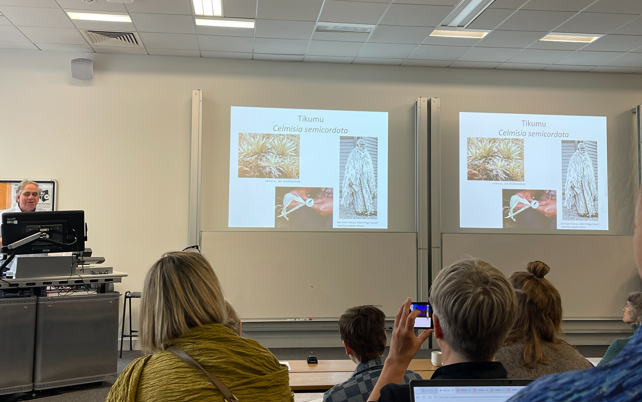
- Mark Nesbitt from the Royal Botanic Gardens
Day 1
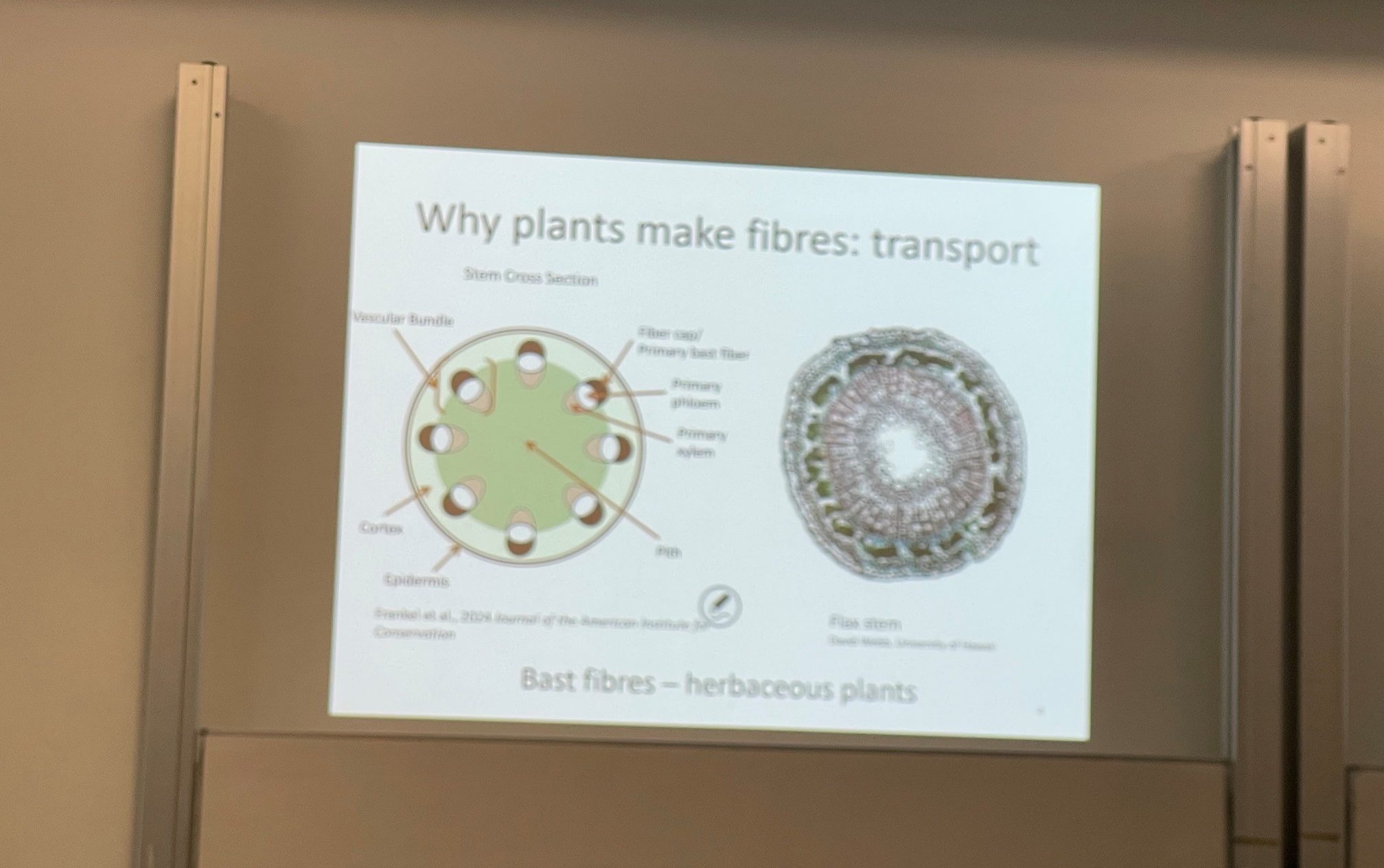
The conference kicked off on 17 September, 2026, with a keynote by Mark Nesbitt from the Royal Botanic Gardens, Kew, titled Co-evolving Threads: Botanical Evolution, Indigenous Craft, and the Roots of Material Intelligence.
-
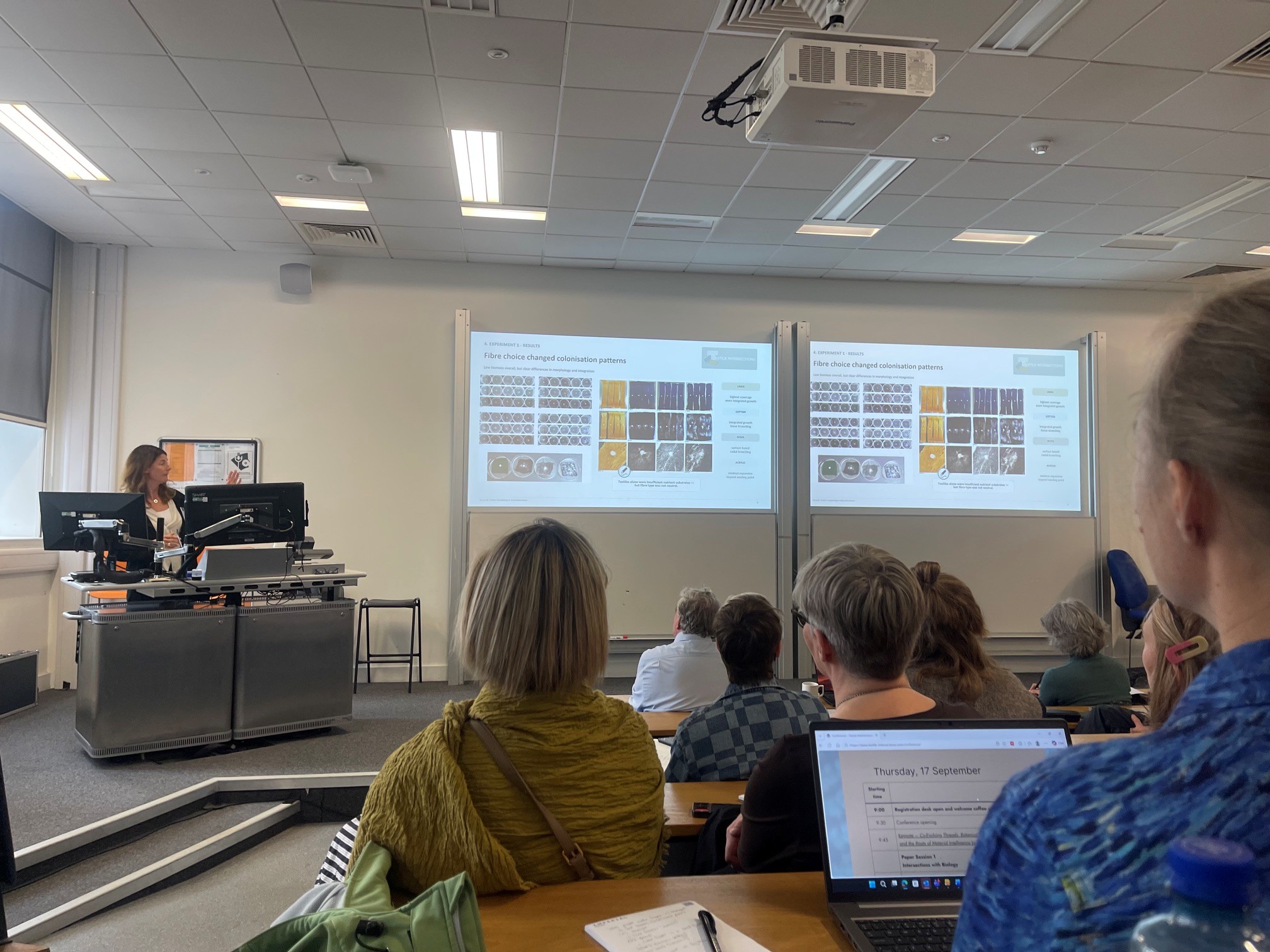
- Towards Textile Templating in Mycofabrication
-
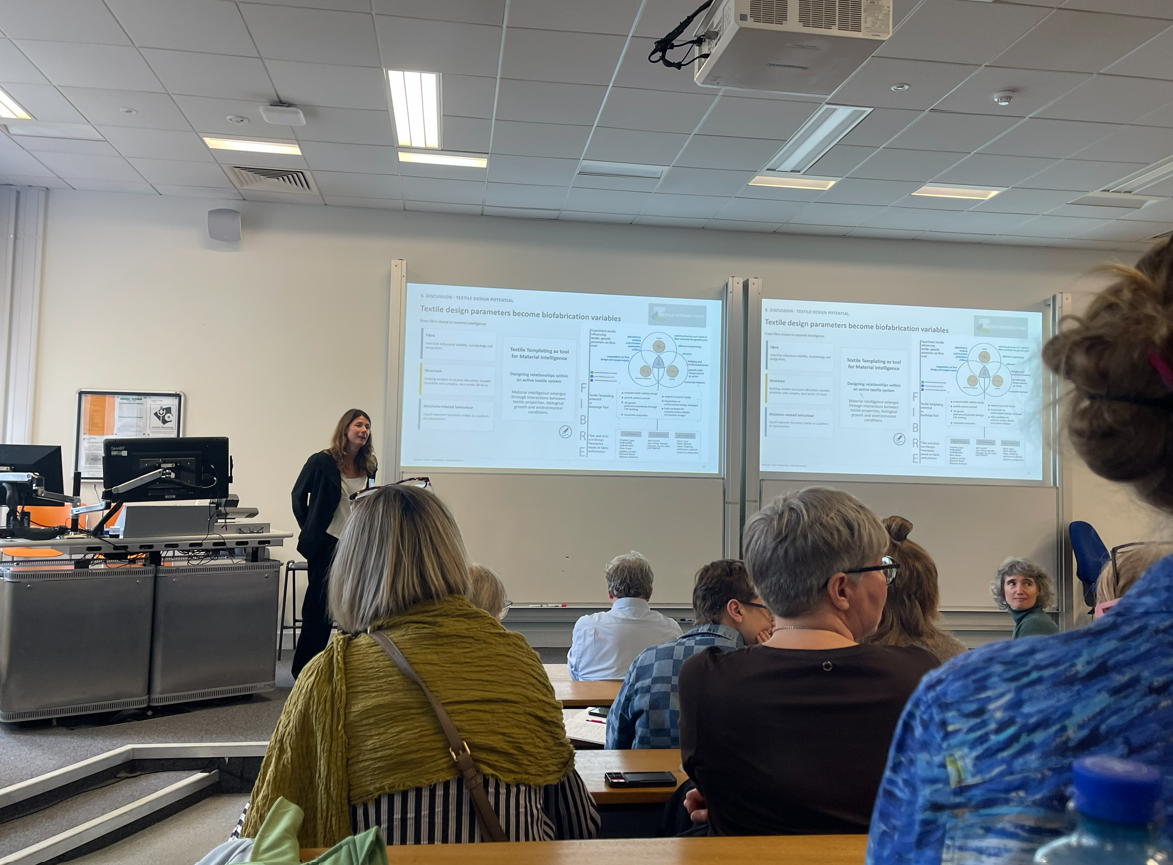
- Presented by Romy Kaiser
The day’s presentations were categorised into four sessions – Intersections with Biology, Intersections with Colour, Intersections with Culture and Communities and lastly Intersections with Software and Hardware.
-
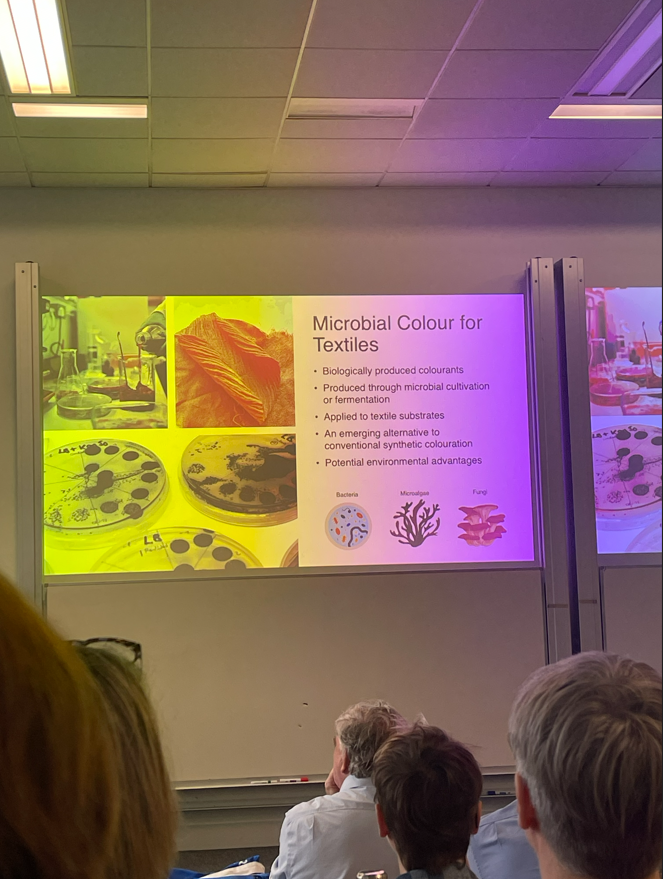
- Developing an Industrial Microbial Colour System Through Textile Printing
-
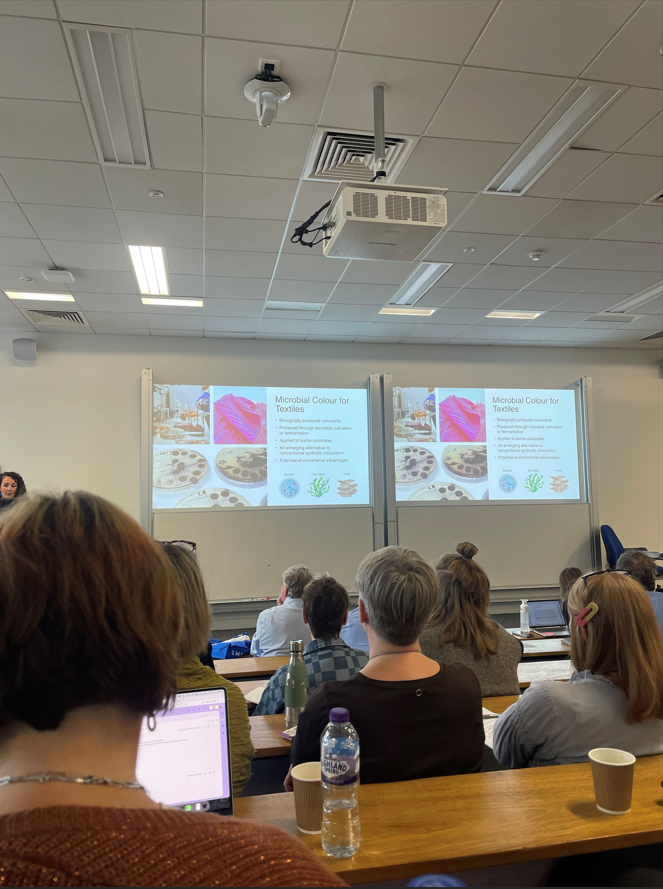
- Presented by Ruth Llyod
Each presentation brought a different perspective to the table, highlighting the remarkable breadth of research taking place within textiles today. We heard about how fibre choices can influence the colonisation patterns of mycelium; food waste being transformed into wearable biomaterials; bacterial cellulose as a biofabricated textile; and research into biologically produced colourants and more ethical approaches to pigments.
-
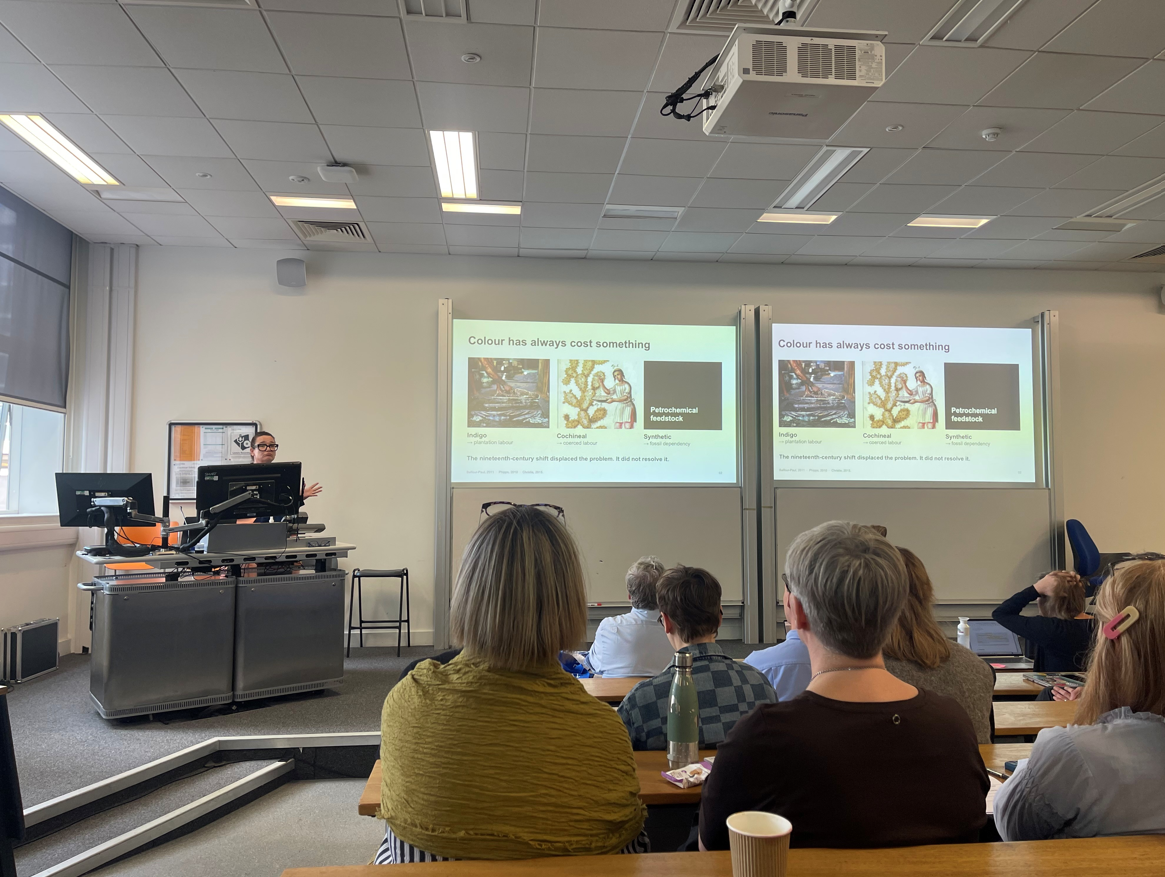
- Colour Without Extraction: Towards Ethical Printing, by Tonya Meyrick
-
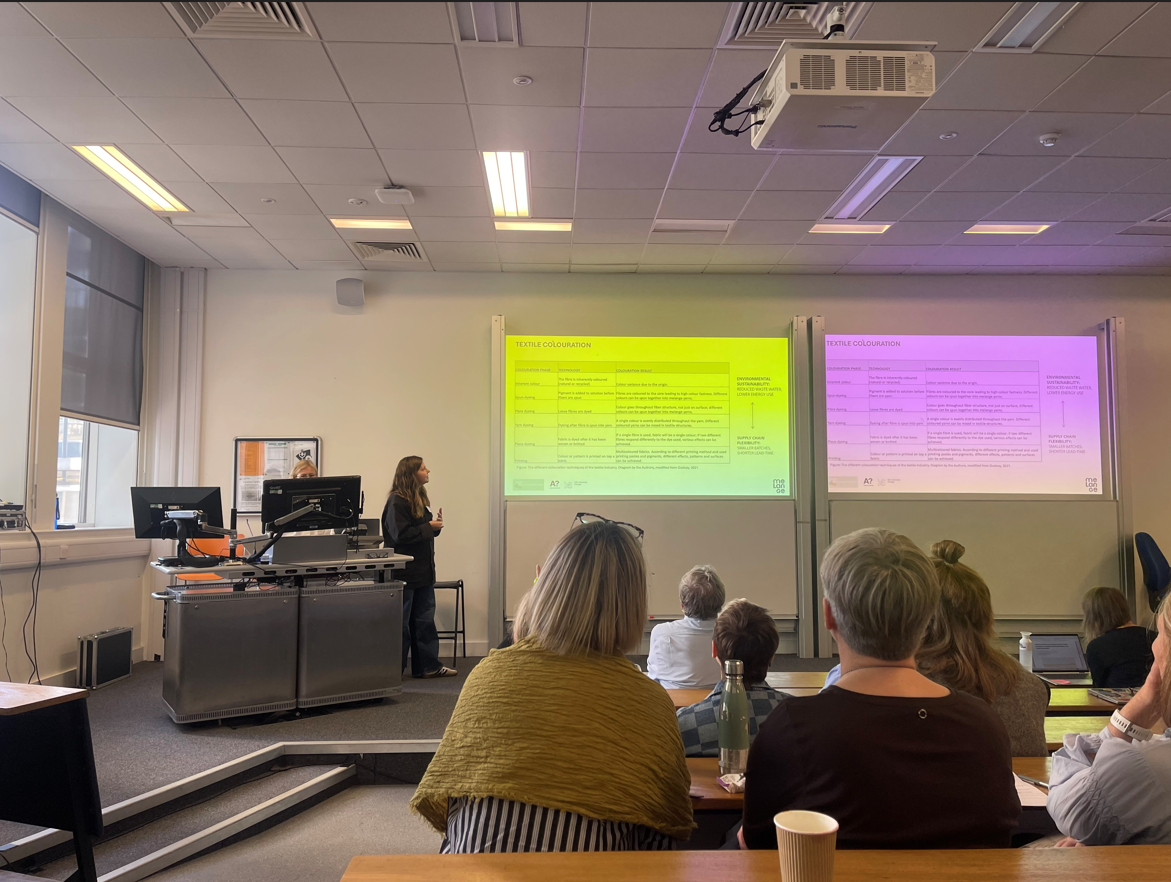
- Design Decisions as Leverage Points of Textile Production and Supply Chain Orientation by Maarit Salonainen and Helmiina Hirviniemi
Other topics ranged from Project REYA and the reuse of deadstock yarn, to exploring design decisions as leverage points within textile production; examining how vocabulary marginalises the material narrative of native British wool; material intelligence of casein for future textiles; and designing with evolutive colors. Visible mending and the aesthetics of care, as well as Textile Digital Drape Definition (TD3), were among the many other subjects that demonstrated how textile research is bringing together material knowledge, technology, sustainability and new approaches to design.
-
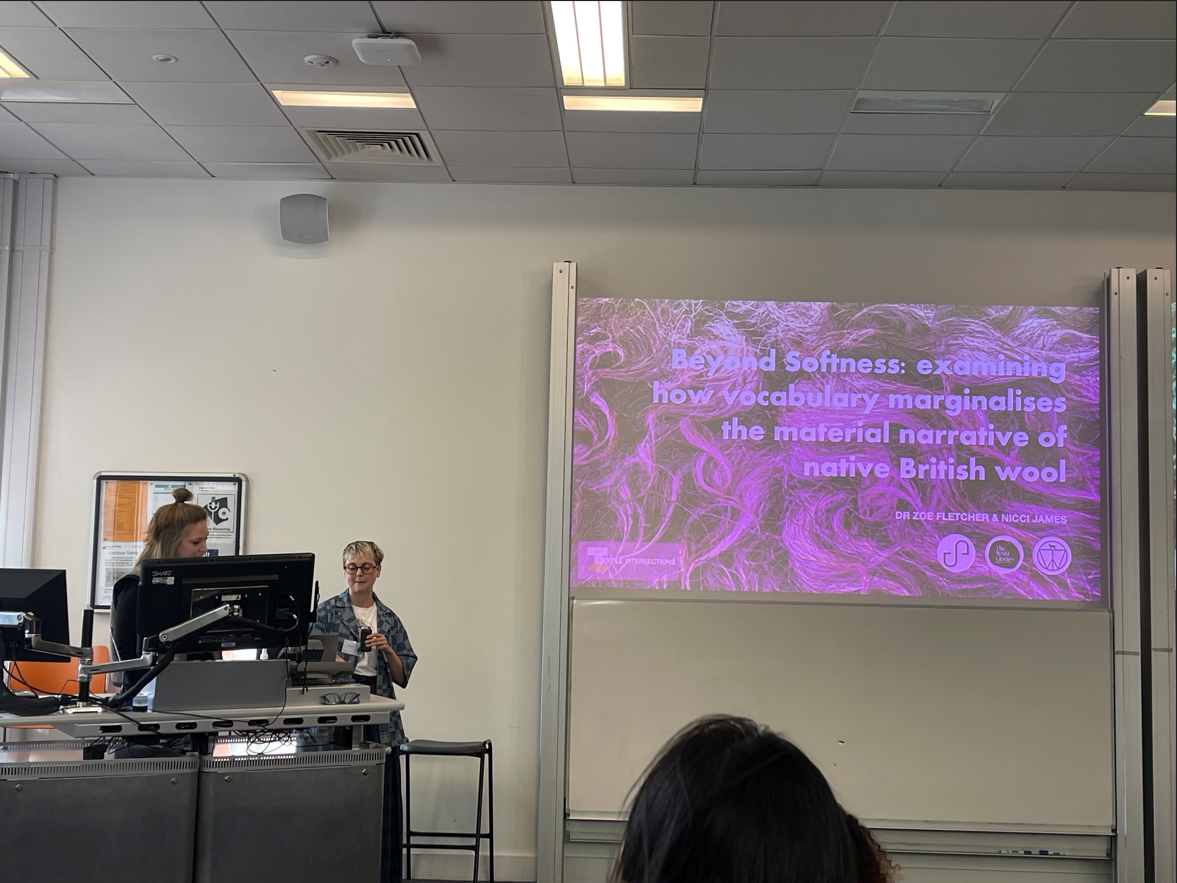
- Beyond Softness: examining how vocabulary marginalises the material narrative of native British wool
-
- By Zoë Fletcher (MMU) and Nicci James, University of the Arts, London
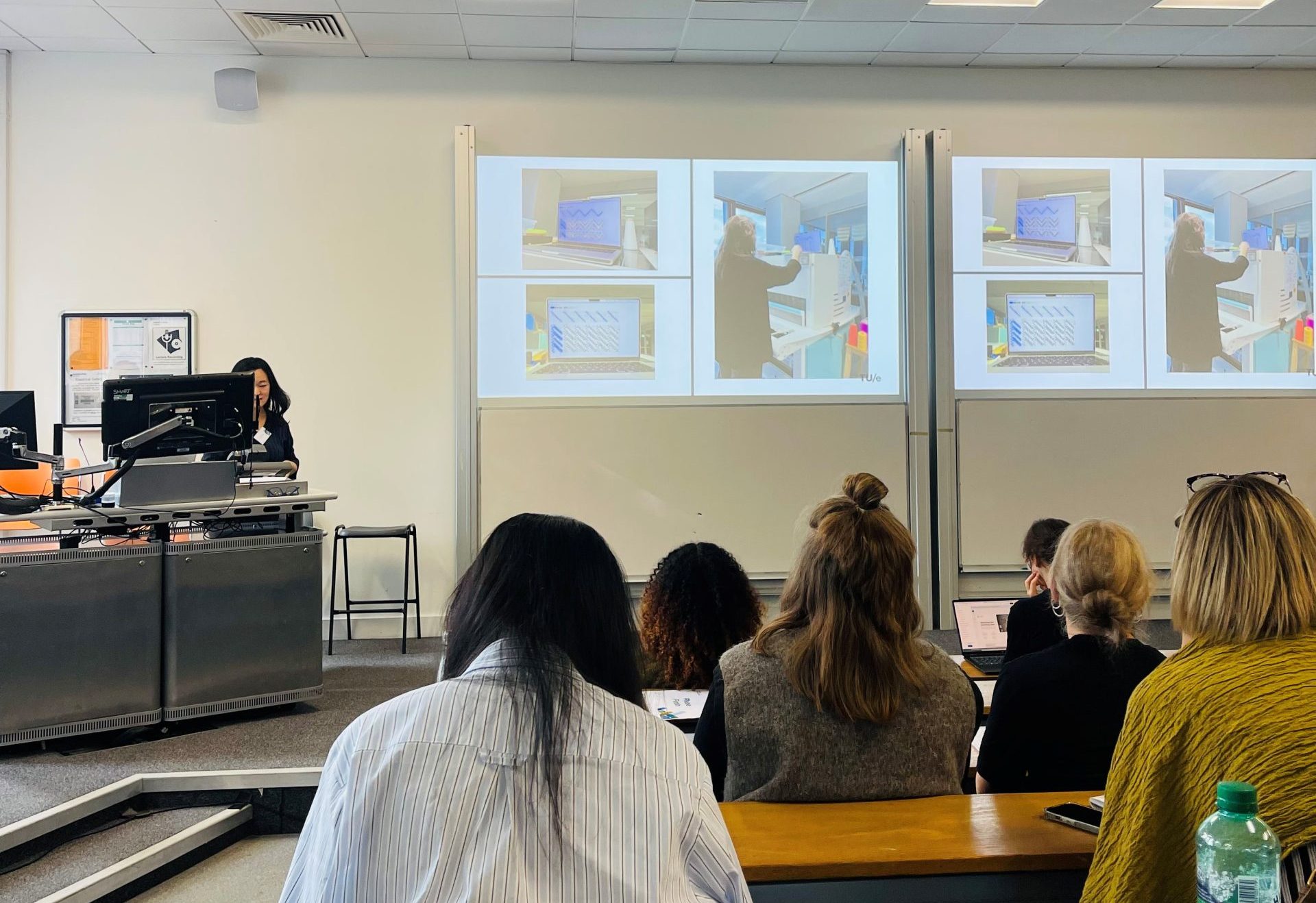
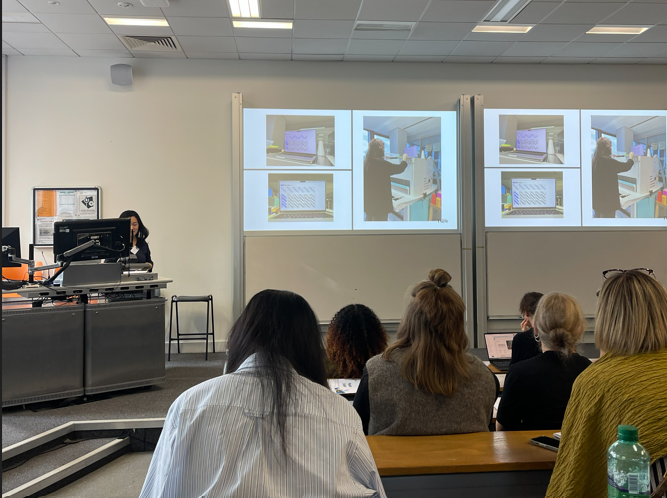
And then, of course, there were presentations where the loom itself was a part of the research. One of these was LOOMING between shaft looms and a TC2 Jacquard Loom – A Serendipitous Expedition with Live Weaving, presented by Pei Lin, Helen Milne, Femke Vorselen and Kristina Andersen from Eindhoven University of Technology in the Netherlands, together with Alex McLean from Then Try This in Sheffield, UK. The presenters explained…
-
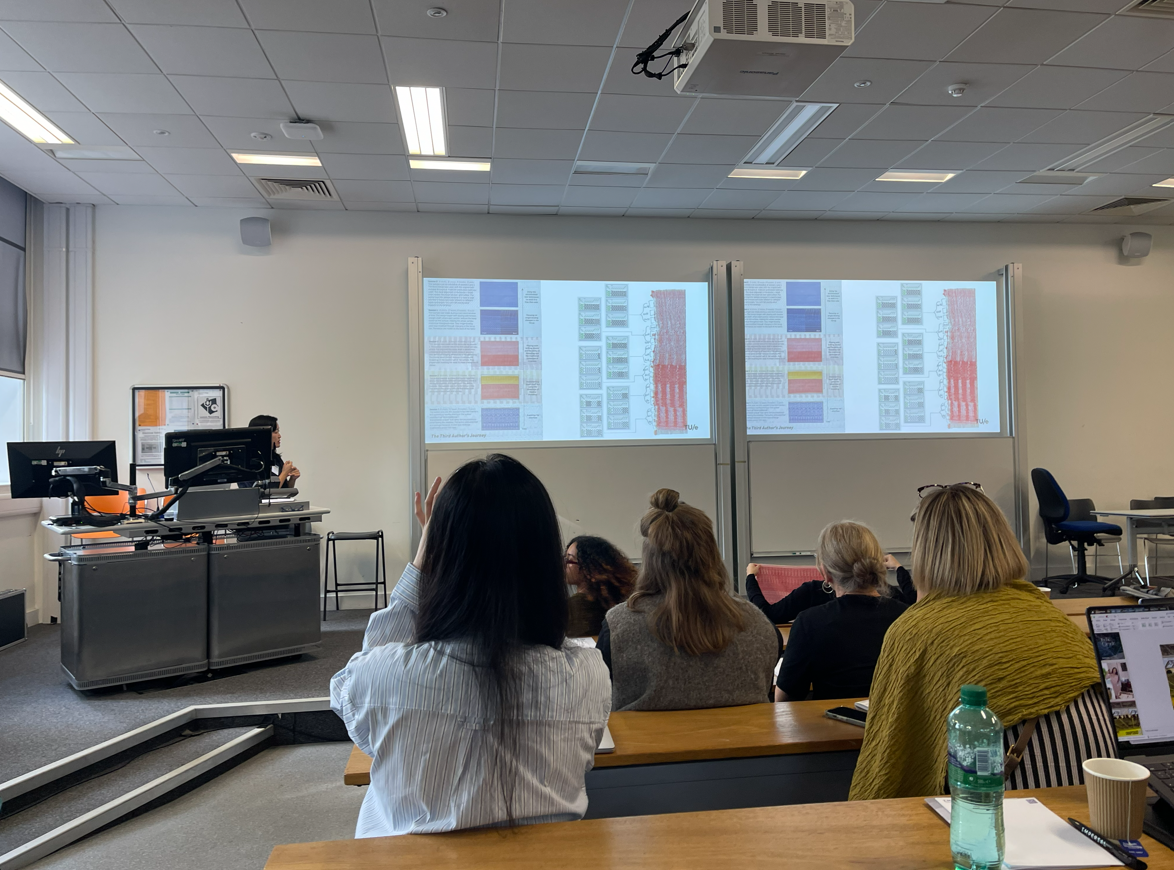
- LOOMING between shaft looms and a TC2 Jacquard Loom – A Serendipitous Expedition with Live Weaving
-
- Presented by Pei Lin, Eindhoven University of Technology, The Netherlands
The paper describes an artistic exploration of the potential for more lively engagements with a TC2. We listened to the loom to enable control of every warp thread in real time, allowing live manipulation of the patterns. This exposed us to the cognitive challenge of designing live for 2 to the power of 1320 warp possibilities. To address this, we made a customised TC2 control software interface, LOOMIMG, that implements traditional shaft loom logic as a digital, interactive weaving draft. Our tests with two experienced weavers suggest that this facilitates not only a creative space that is workable and exploratory, but also access to traditional weaving knowledge built on the foundation of shaft looms. The interactive weaving draft also offers the versatility to emulate shaft looms with customised shaft numbers and sizes, tie-ups that can be modified on the fly, digitally controlled treadling, and the ability to work with algorithmic logic in a weaving draft. We propose a broader reconsideration of the capability of existing fabrication machines through the semantic space of textile practices, and consider how the ‘language’ of textile making might be transferable to digital craftsmanship.
-
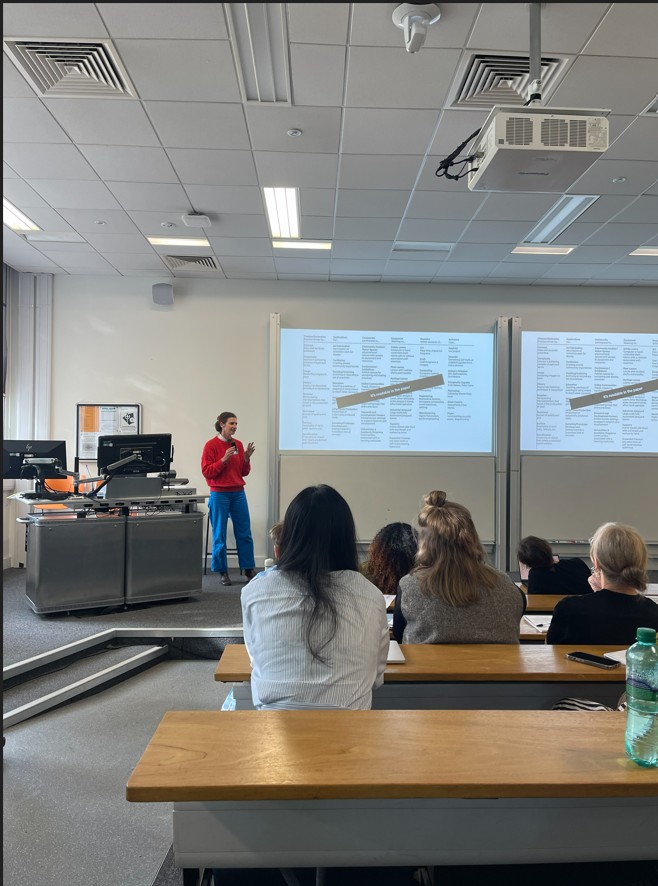
- Laura Devendorf talking about AdaCAD Project
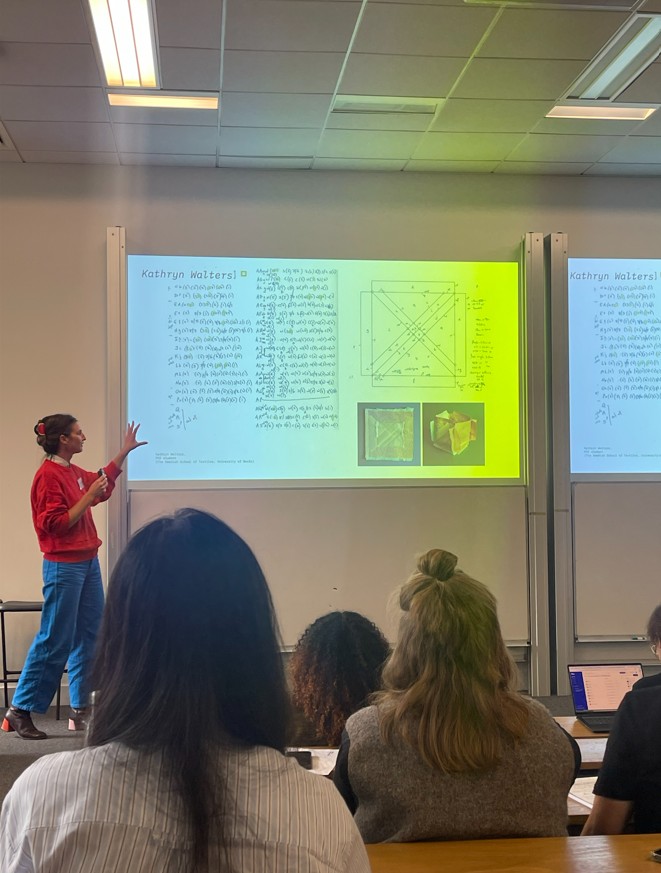
Another presentation in which the TC2 played a role was Imagining Open-Source Ecosystems for Experimental Weaving: A View from the AdaCAD Project, by Laura Devendorf, Deanna Gelosi and Etta Sandry from the University of Colorado Boulder, USA. The presenters explained:
The project describes and reflects on a series of activities, performed from 2024-present, that looked to grow an open-source ecosystem centered around AdaCAD, a tool for what we began to call experimental weaving. We describe how we came to see experimental weaving as a term that can capture approaches and applications for weaving beyond common characterizations that center disciplinary affiliation or professional identity. We sketch the boundaries and sites of experimental weaving as it relates to our project and offer insights on common needs and challenges our project presented for these groups. We conclude by envisioning broader ecosystems for experimental weaving that can honor the specificity and diversity of practices that the term brings together.
-
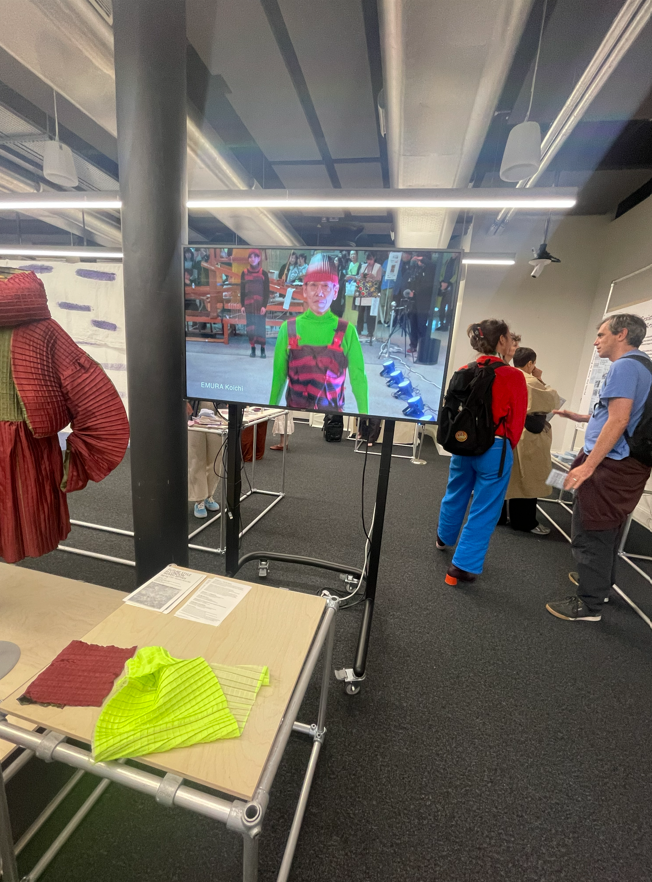
- Oh! NeoNeo: Zero-Waste Garments for Biodegradable Future
-
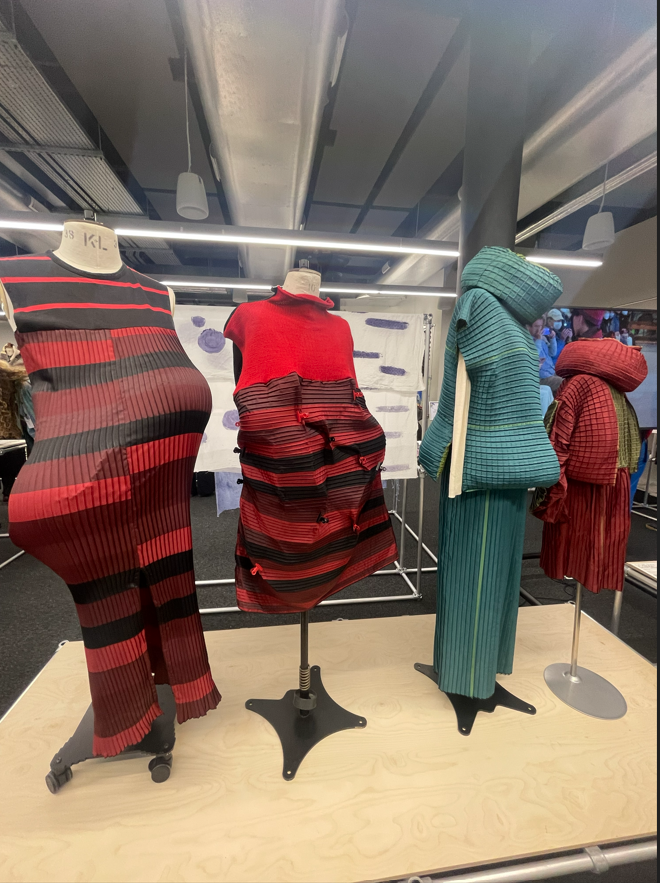
- By Kaori Ueda, Koichi Emura
Material Intelligence Exhibition
At the end of Day 1, we were invited to the Material Intelligence exhibition. The exhibition explored a wide range of interpretations of the relationship between materials and intelligence. From the materials used in textile production and fabrication, to the exploration of ‘Intelligence’ as contextualized by recent and historical conversations about AI, the theme also extends to other-than-human forms of intelligence, including those found in plant and animal life.
-
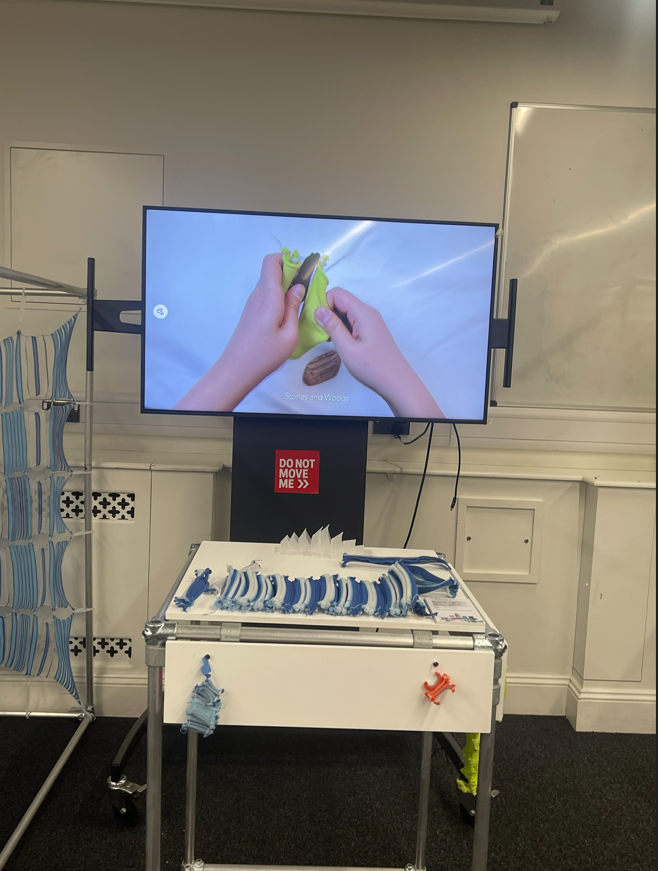
- Curl-to-Grip by Qingru, Po-Chun Chou, Sean Ahlquist
-
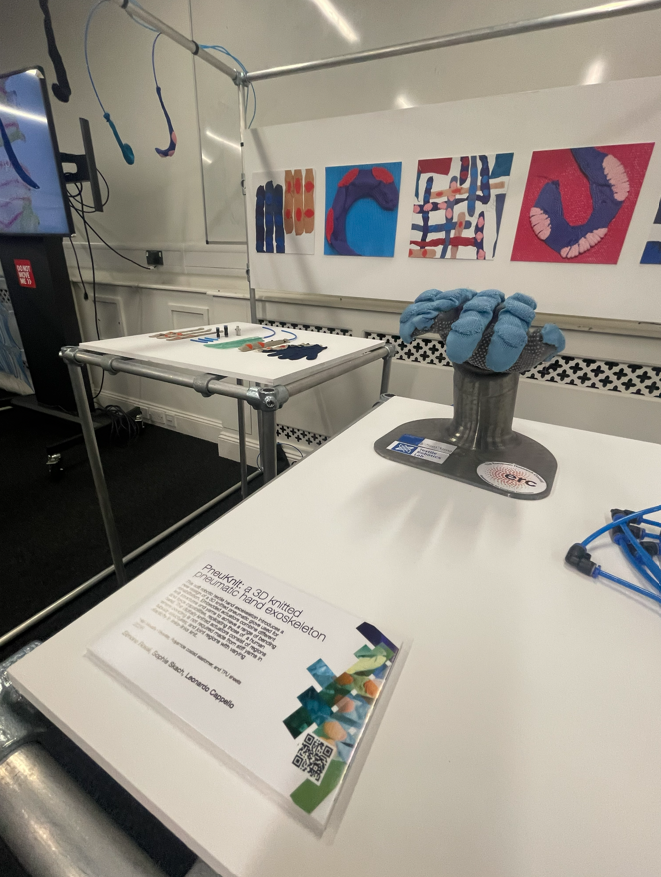
- PneuKnit: A 3D knitted pneumatic hand exoskeleton by Simone Rossi, Sophie Skach, Leonardo Cappello
The exhibited works engaged with and expand upon these critical perspectives through questions of technology, human–machine collaboration, and the agency of non-human agents, both biological and synthetic. They also consider the ways in which commons are created and sustained through craft traditions, communities, and the transmission of knowledge through material practices.
-
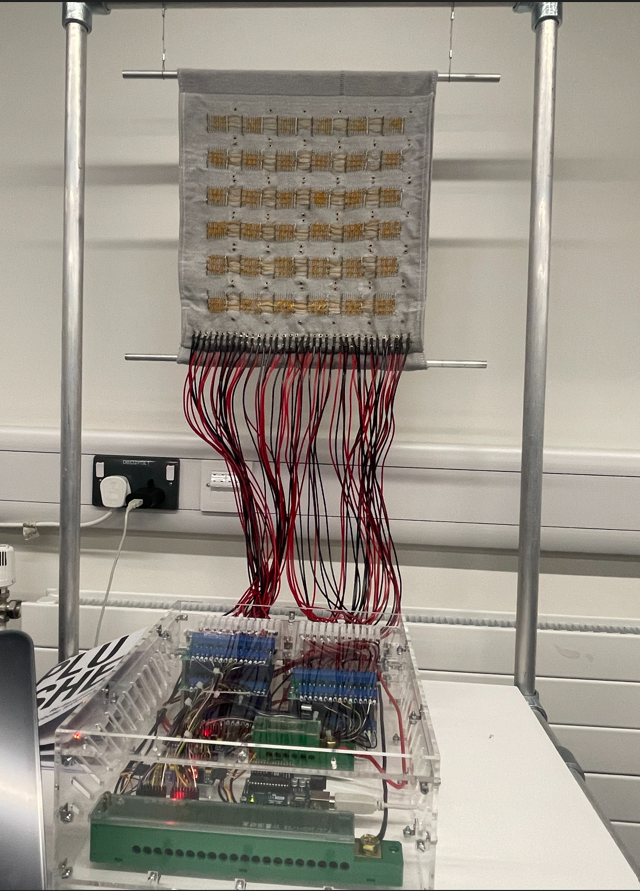
- PluShe: Re-imagining textures by Ciccy Lyu, Miguel Bruns, Albert Schenning, Xue Wan, Amy Winters
-
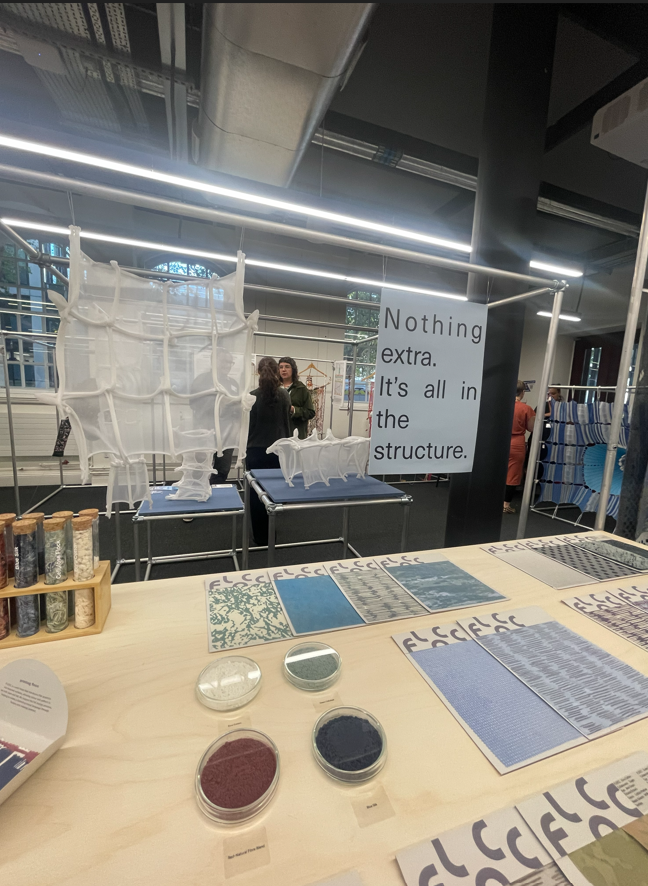
- FLOCC: Chromatic Interaction by Sarah Taylor, Sara Robertson, Annika Syrjämäki
Among the many exhibits was a piece woven on the TC2, by Femke Vorselen from Eindhoven University of Technology in the Netherlands. Titled, Crafting bioreceptive textiles for plant-human interactions, the piece on display explores how woven textiles can act as living materials to support indoor climbing plants.
-
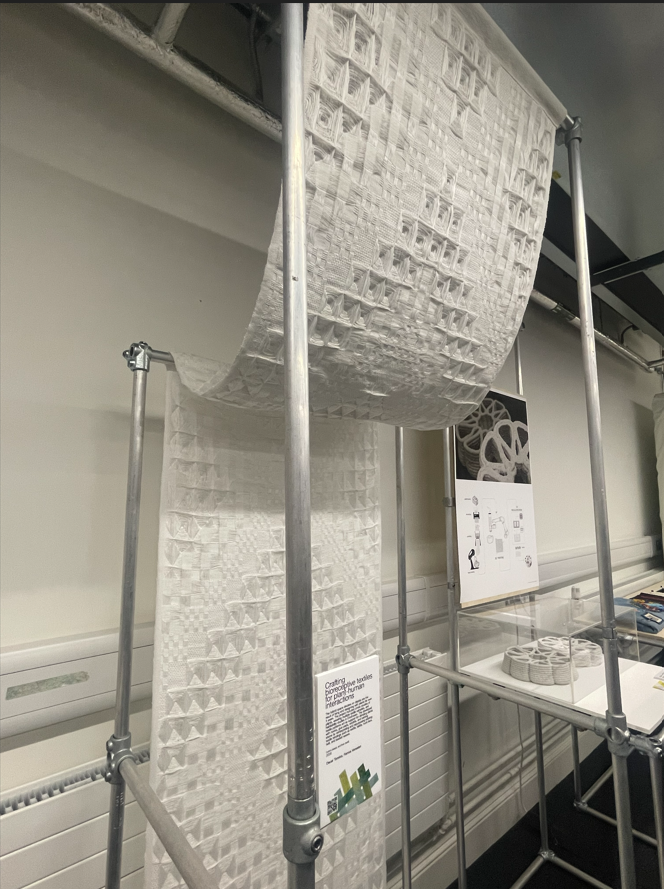
- Crafting bioreceptive textiles for plant-human interactions by Oscar Tomico, Femke Vorselen
-
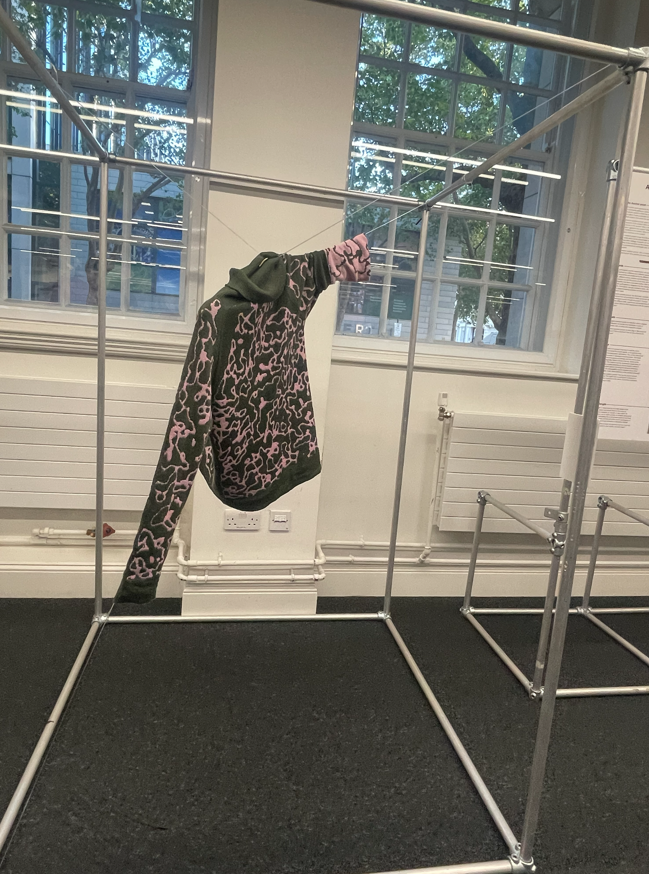
- Slime Mold Sweater by Troy Nachtigal, Leslie Eisinger, Ralf Jacobsl,
Day 2
Day two continued with presentations organised into four sessions: Intersections with Practices and Processes, Intersections with Smart and Programmable Systems, Intersections with Soft Robotics, and Intersections with Woven Interactions.
-
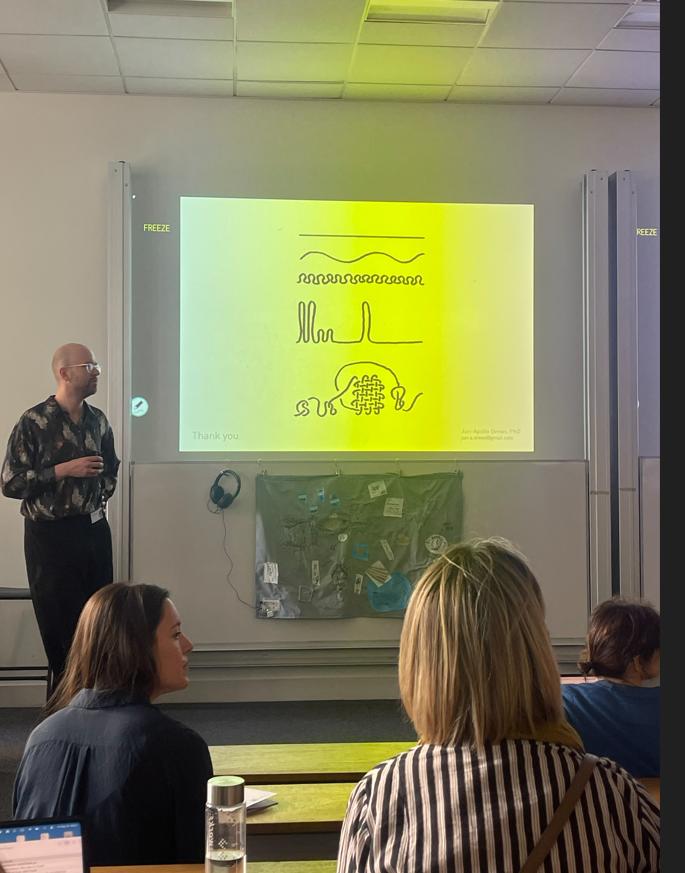
- Including the Hybrids: The Thread Arrangement as a Lens for Manifesting Textile Designers’ Agency
-
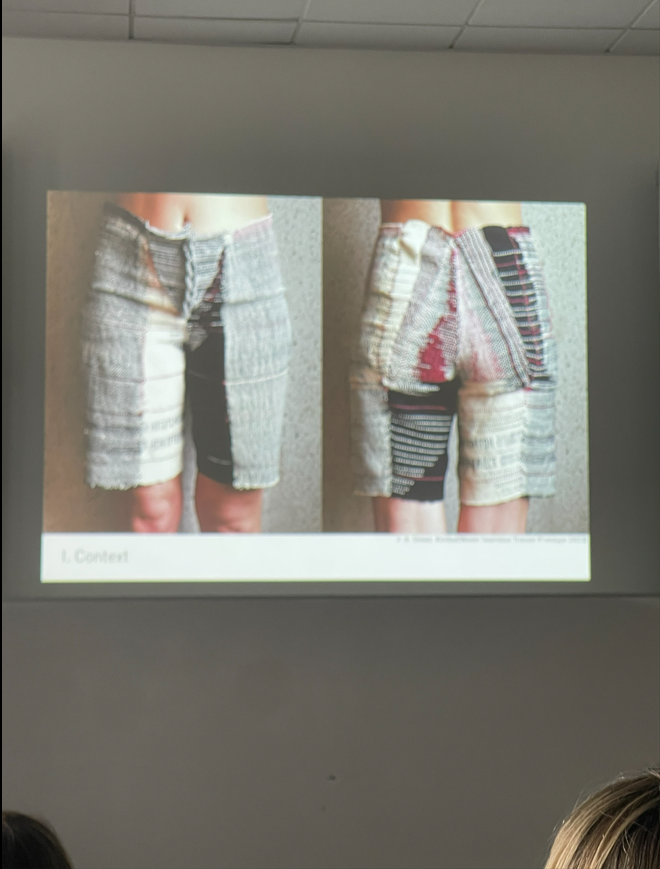
- Presented by Juri-Apollo Drews, Cluster of Excellence Matters of Activity, Germany
Once again, the range of research was impressive. Topics included thread arrangement as a way of understanding textile designers’ agency, sketchnoting practices with e-textiles, designing garments as processes, 3D-transformable textiles woven with hygromorphic yarns, and circular knitting for zero-waste design.
-
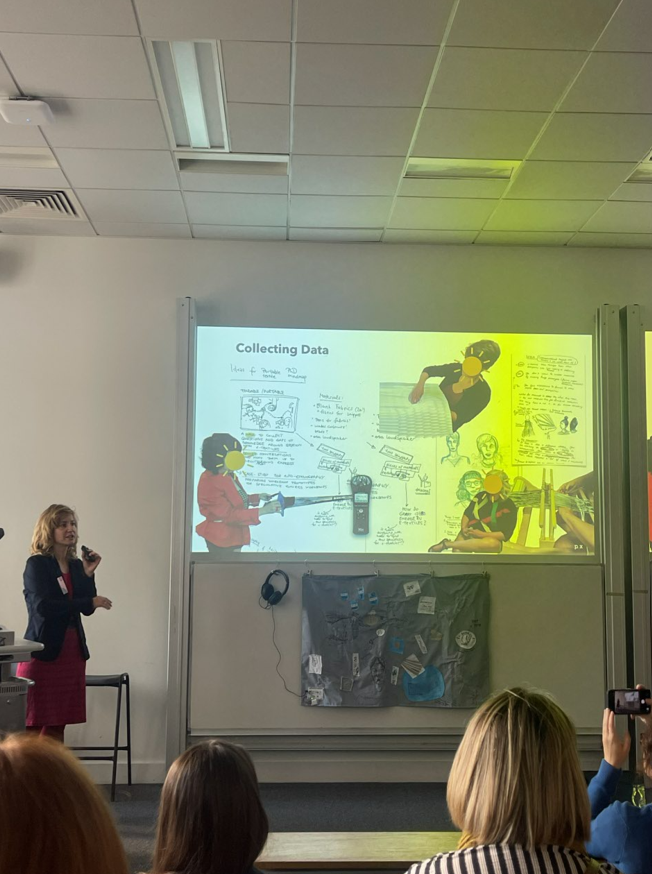
- Sketching Fast, Sketching Slow: Extending Sketchnoting Practices With E-Textiles; presented by Anna Blumenkranz, University of Salzburg, Austria
-
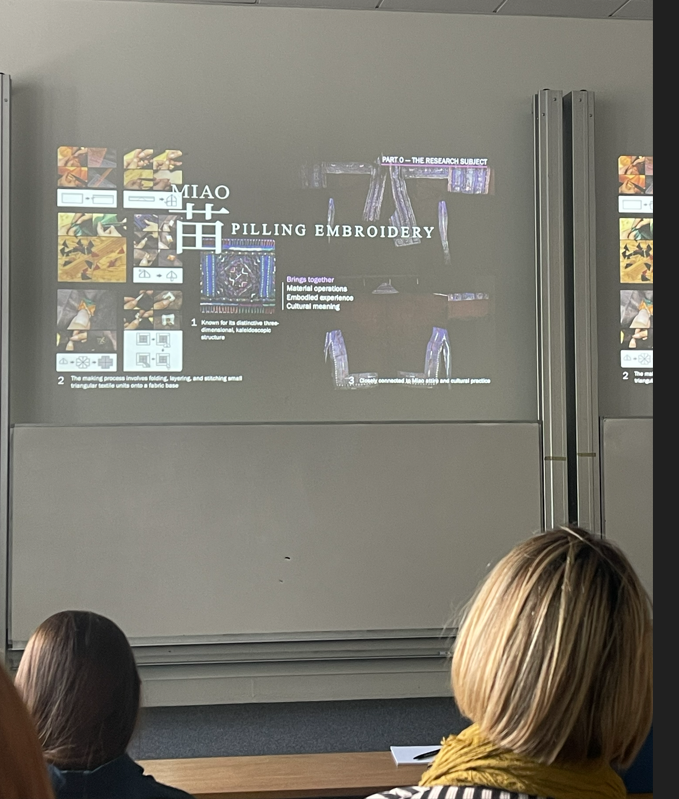
- From Textility to Embodied Experience: A Practice-Led Generative Approach to Textile ICH Engagement by Mi Lin, Royal College of Art, United Kingdom
Other presentations explored self-powered triboelectric textiles, recycling metallised fabrics, zonal elasticity in layered woven textiles, Thai backstrap weaving as embodied interaction, and programmable capacitive sensing through crochet for garments with tactile interaction.
-
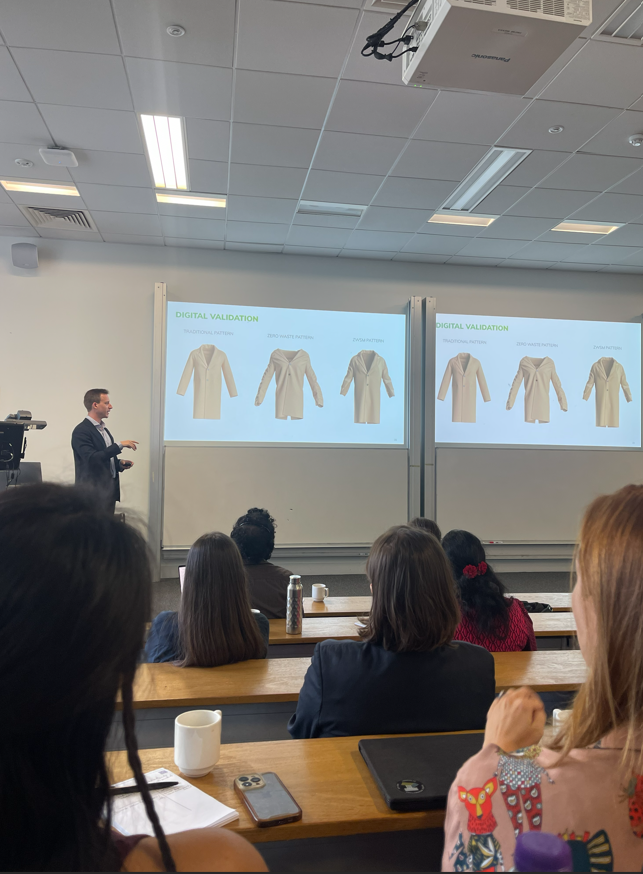
- Shaped Circular Knitting for Zero Waste Design: A Material-Driven Approach To Knitted Textile-Forms by Sem Janssen
-
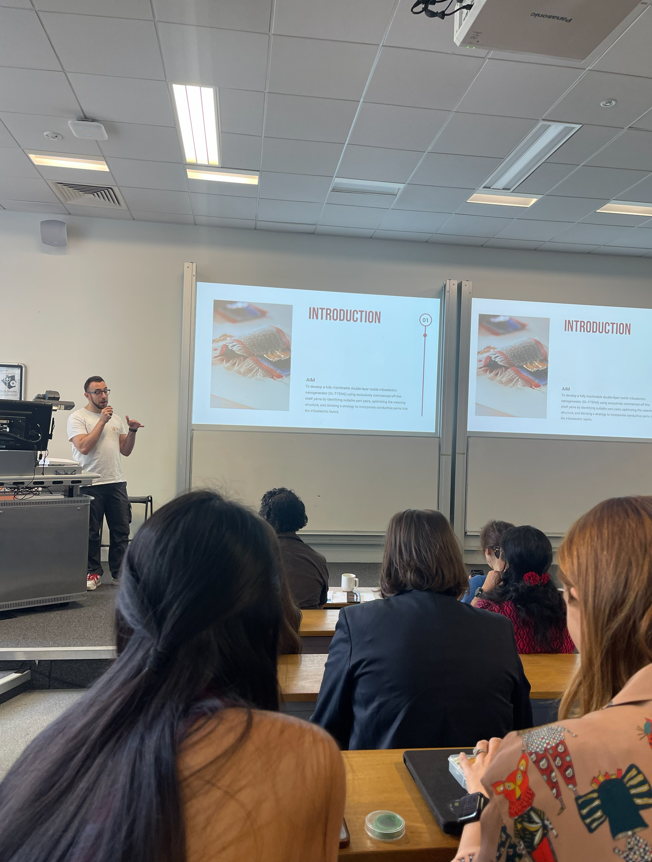
- Towards self-powered woven triboelectric textiles using commercial yarns, by Matteo Iannacchero, Aalto University, Finland
Of particular interest to us was WarpForm: An Accessible Loom Add-On for Weaving Non-Rectangular Textile Forms, a project from Delft University of Technology (TU Delft) in the Netherlands. The project stood out for its exploration of how how a relatively simple loom adaptation can open up entirely new possibilities for woven forms. As the researchers explain:
-
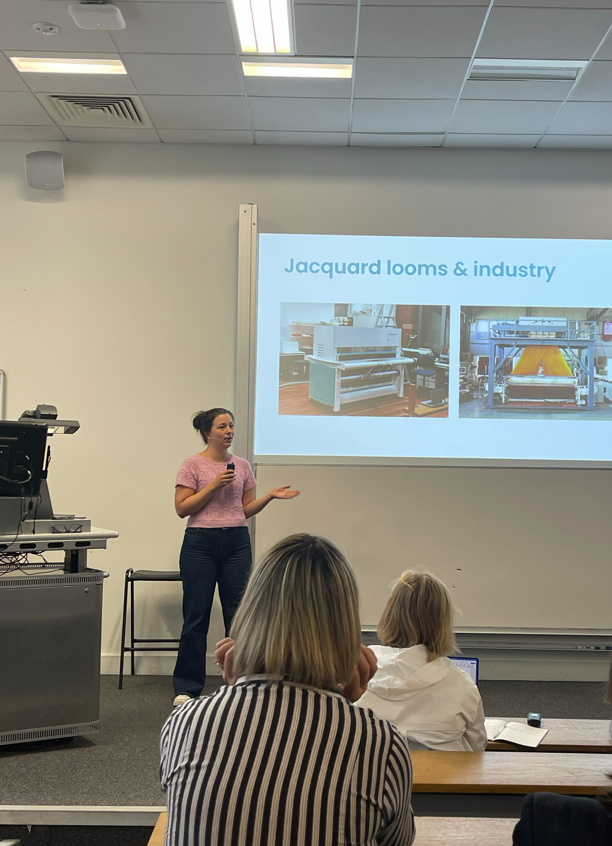
- WarpForm: An Accessible Loom Add-On for Weaving Non-Rectangular Textile-forms
-
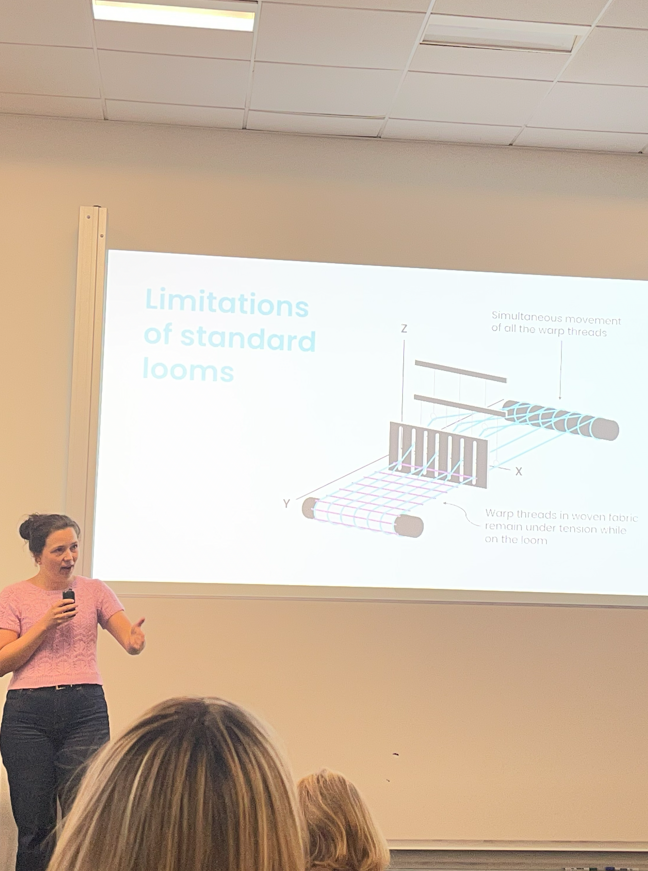
- Presented by Savanne Klop, Delft University of Technology (TU Delft), Netherlands
“We present WarpForm, an accessible add-on for a standard hand-operated loom that opens up new possibilities for weavers. Specifically, through enabling the variable consumption of individual warp threads, WarpForm allows weavers to create 3D and non-rectangular forms directly on the loom. Through a description of the add-on, the weaving process, woven samples, and a demonstrator, this paper aims to provide textile researchers and designers with accessible knowledge and tools to uncover further potential in Textile-form Weaving, moving the textile industry towards more sustainable approaches.”
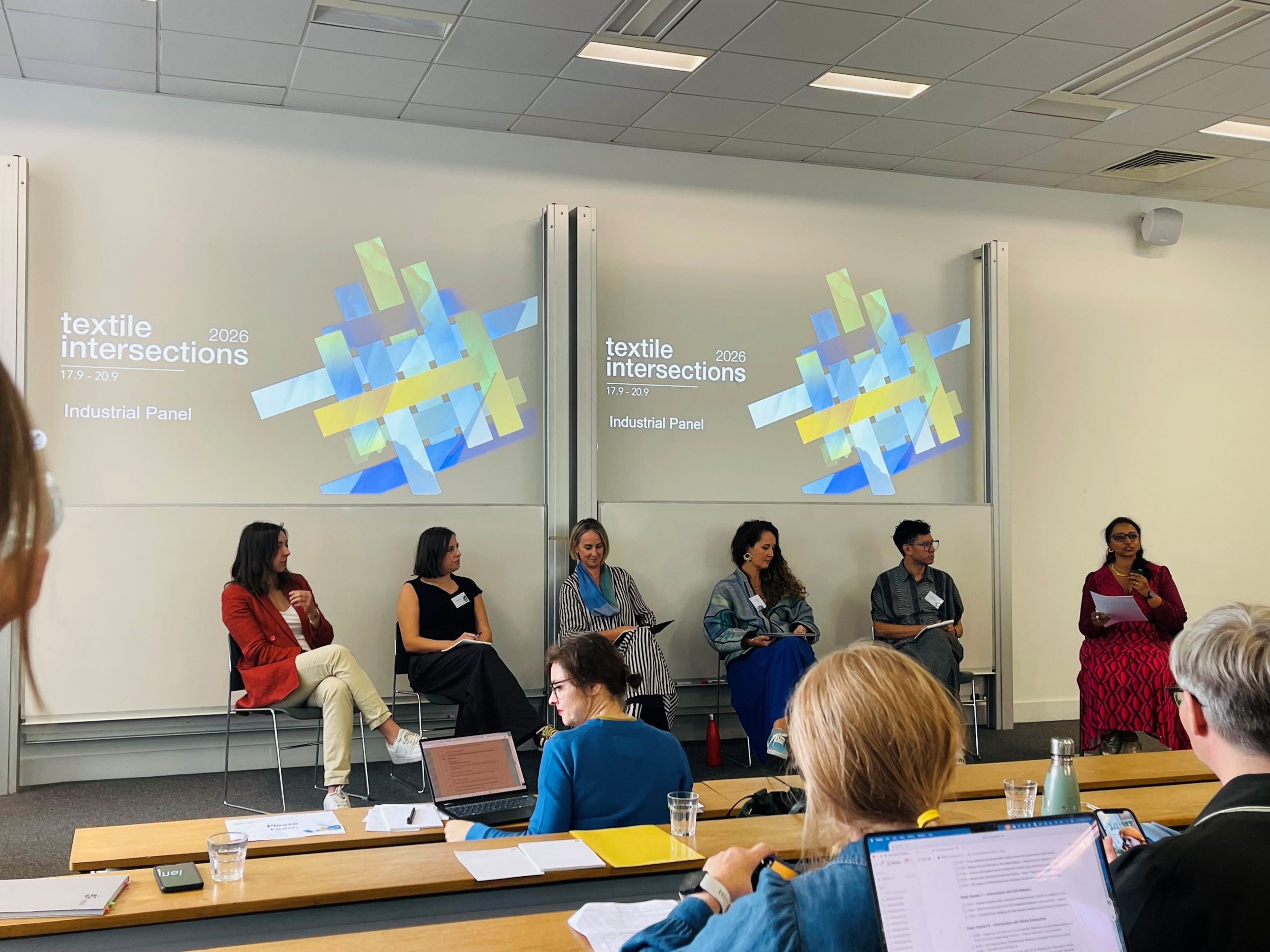
Panel discussion: Bridging the gap between Academia and Industry to Accelerate Innovation
Industry Panel Discussion
Another highlight of the second day was the Industry Panel discussion chaired by Mili John Tharakan, InnovateUK Knowledge Transfer Manager for Smart Materials and Textiles. The Dr. Natalie Ishmael, Innovation Manager, Generation Phoenix; Dr Ruth Llyod, Researcher; Dr Alejandro Luna, SME Research and Development Manager, UAL Fashion, Textiles and Technology Institution; Dr Victoria Mataczynski, Co-founder and CEO, Nanoloom; and Dr Sara Robertson, Co-Founder and Creative Director, FLOCC.
Gazelli Art House
While in London, we also visited Gazelli Art House, which is currently presenting Interweave, a group exhibition featuring five artists connected by their expansive approaches to textiles. The group exhibition brings together artists whose practices connect to textile traditions while extending them into contemporary territories.
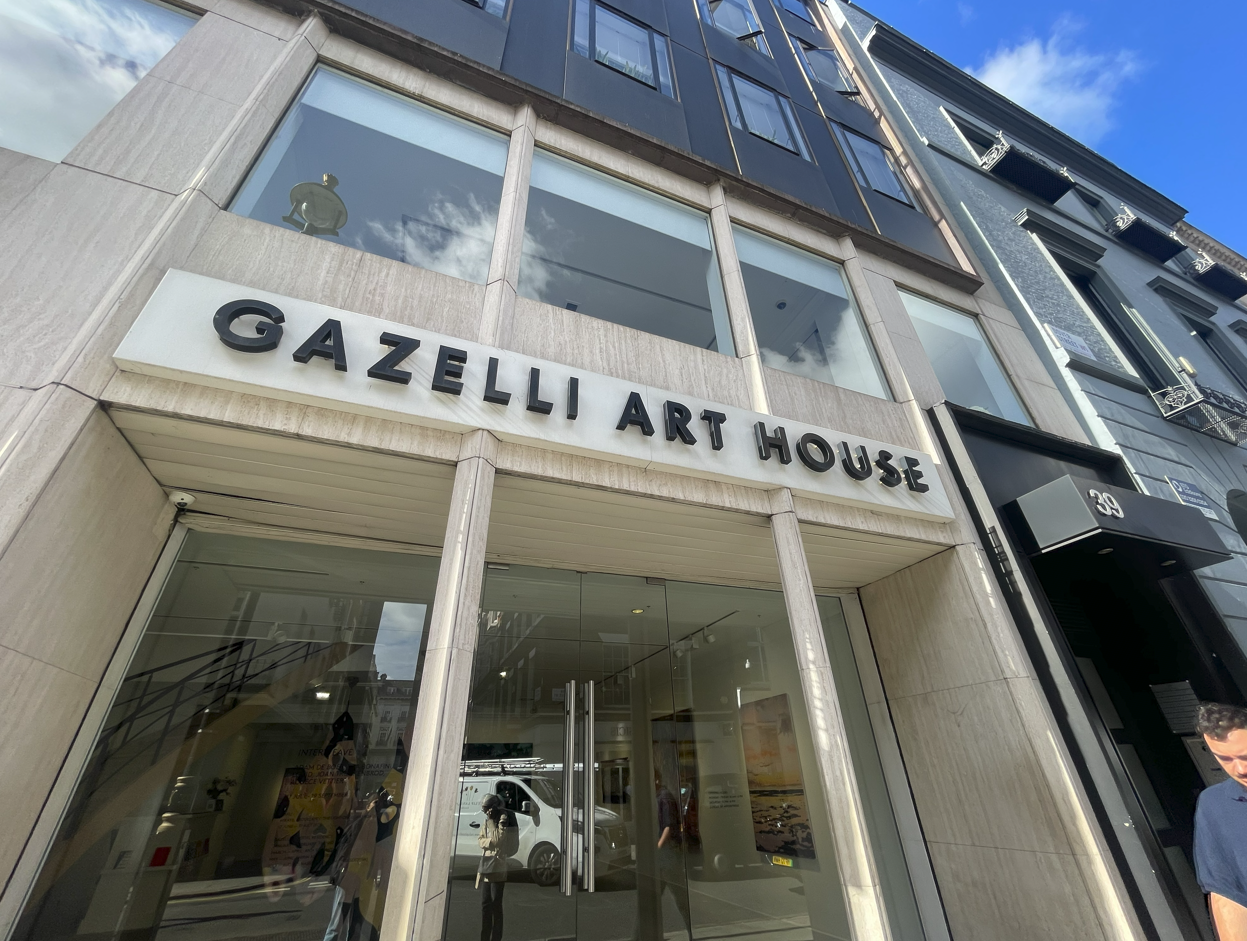
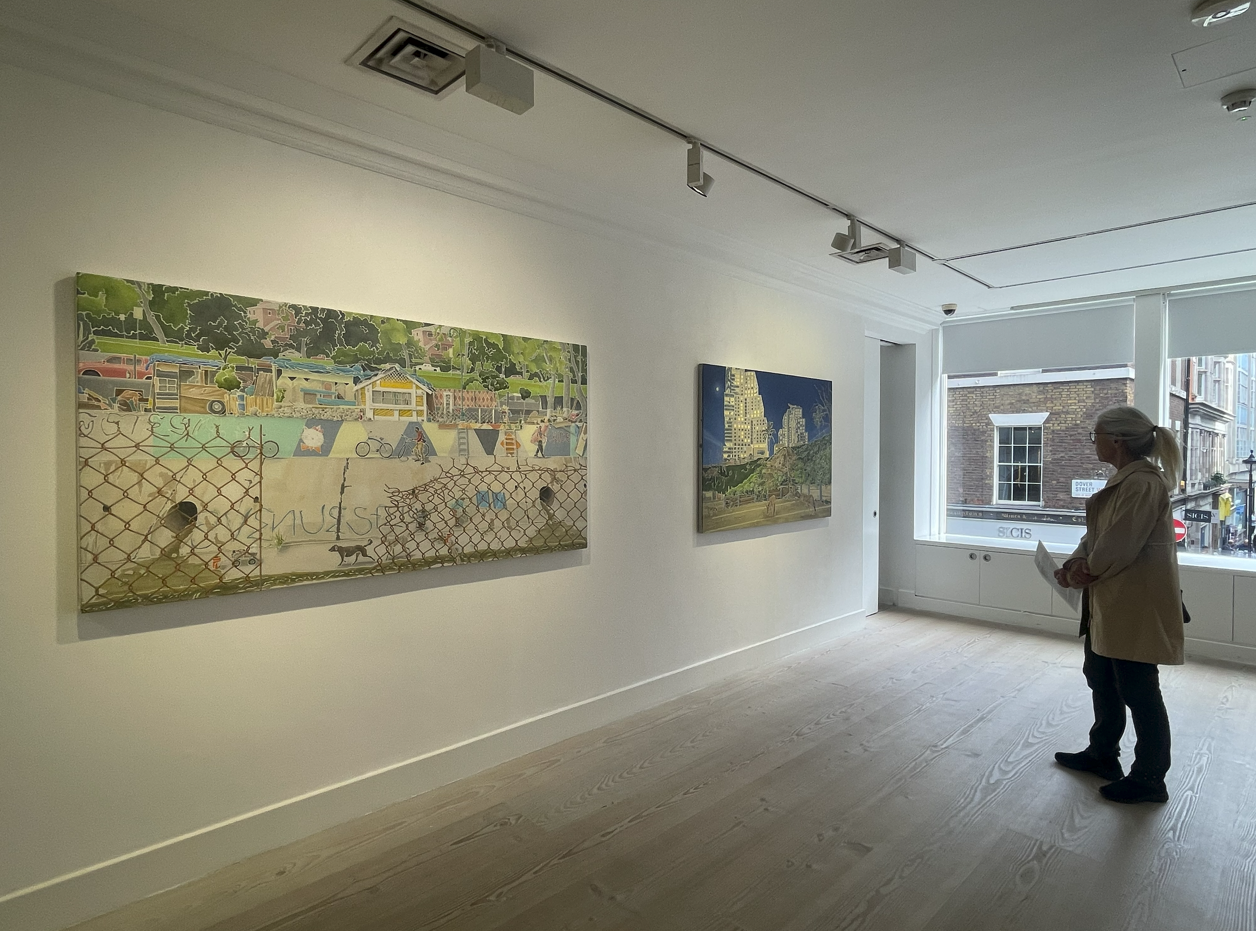
Working across batik, tapestry, Jacquard weaving, carpet inlay, embroidery, digital image-making and AI, the exhibition explores textiles not simply as a medium, but as a way of thinking: one built through connection, accumulation and transformation.
-
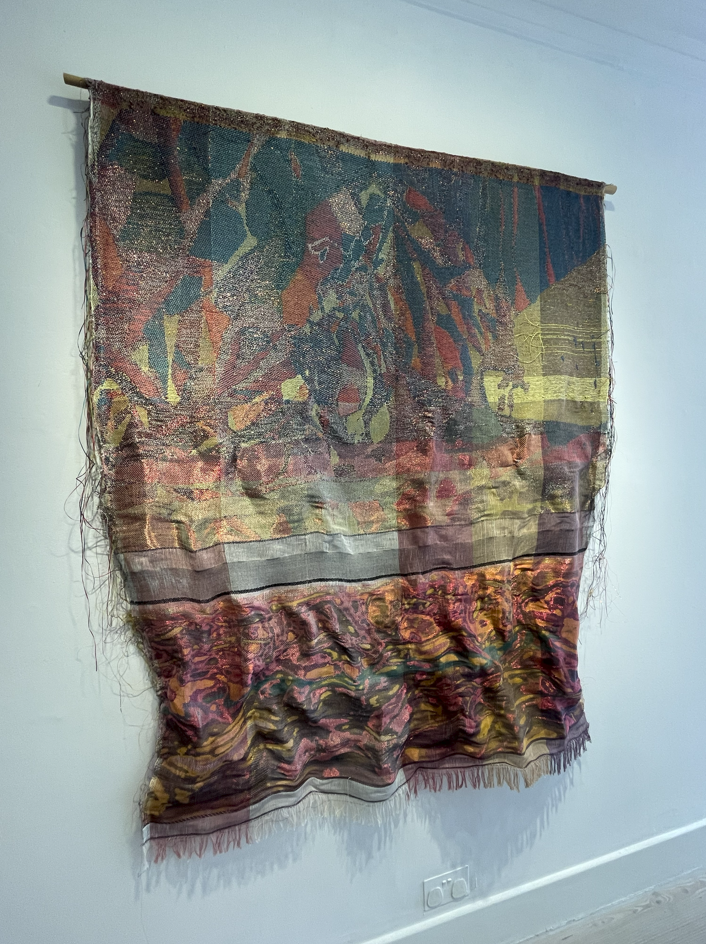
- Shaped Charge, 2025
-
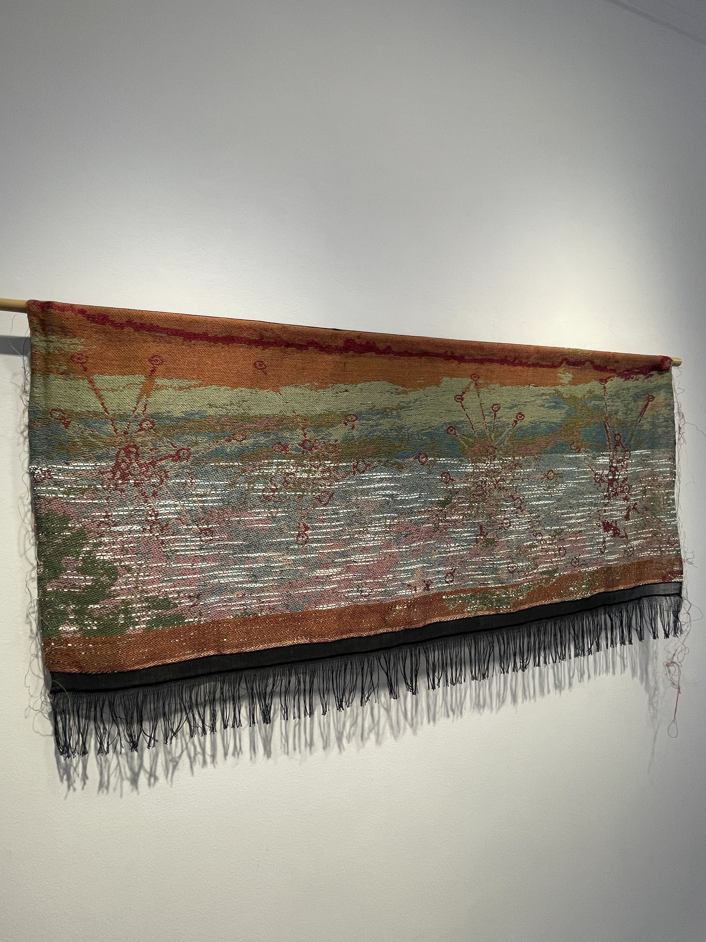
- Involutions Pathways, 2023
The main reason for our visit was to see the works of TC2 owner and fiber artist Joan Truckenbrod, one of the five artists featured in the exhibition. Recognised as a pioneering figure in digital art , since the early 1970s Truckenbrod has explored the intersections of technology, handicraft, and ritual, becoming one of the first artists to use computer programming to create algorithmic drawings and digital textiles. She currently lives and works in Oregon, USA.
-
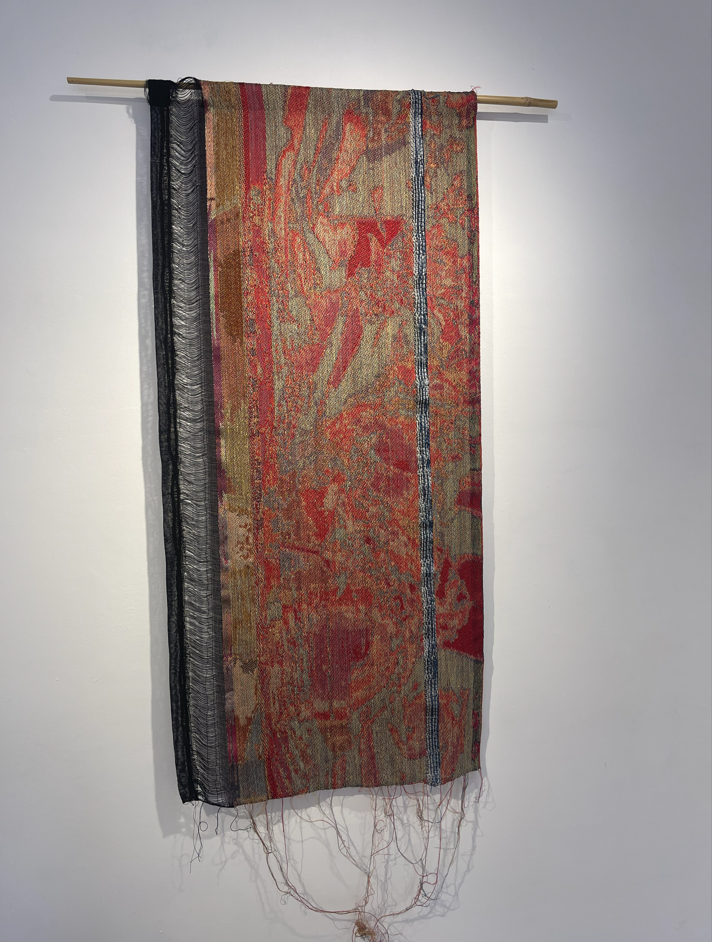
- Constructed Difference, 2024
-
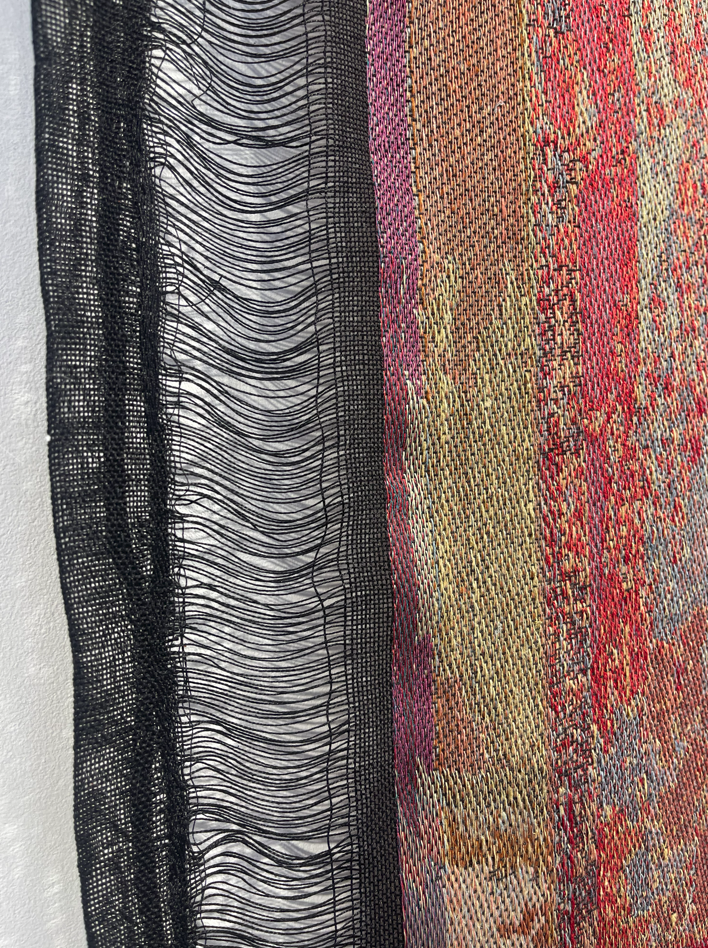
- Constructed Difference (detail)
Victoria and Albert Museum
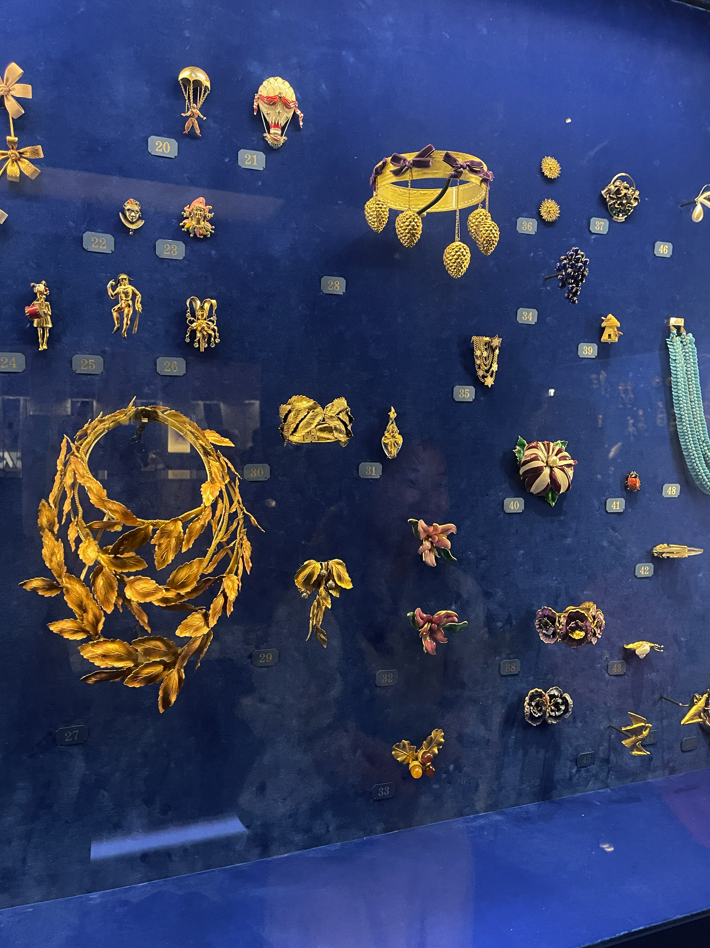
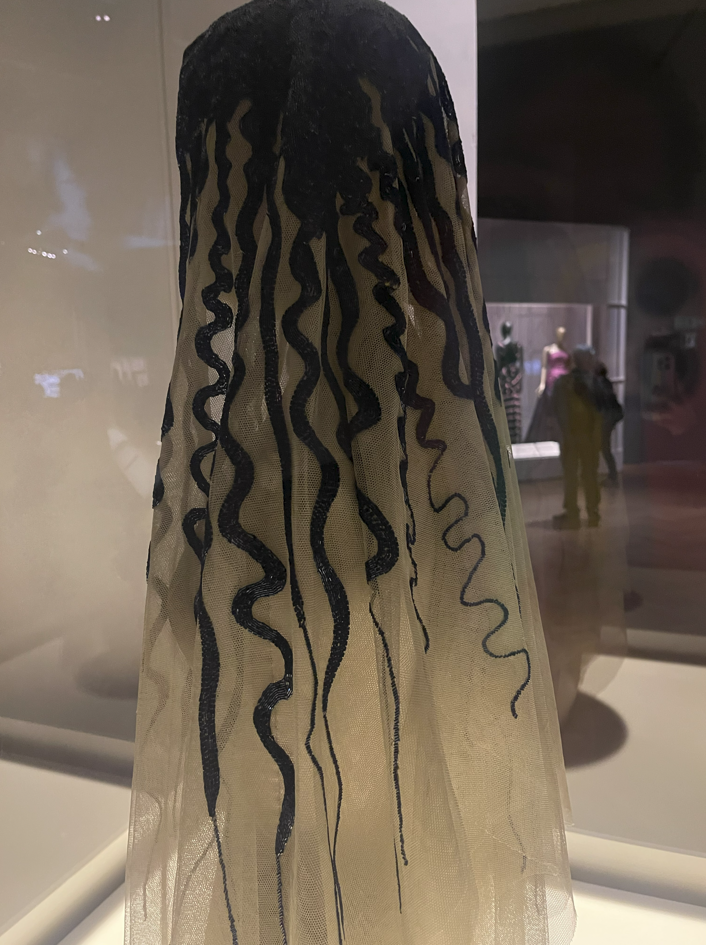
Then, we also visited the Victoria and Albert Museum, where one of the highlights was Schiaparelli: Fashion Becomes Art. The UK’s first exhibition dedicated to Elsa Schiaparelli spans the 1920s to the present day, exploring the designer’s enduring influence on fashion and art. It traces the fashion house from its beginnings to its contemporary evolution under creative director Daniel Roseberry.
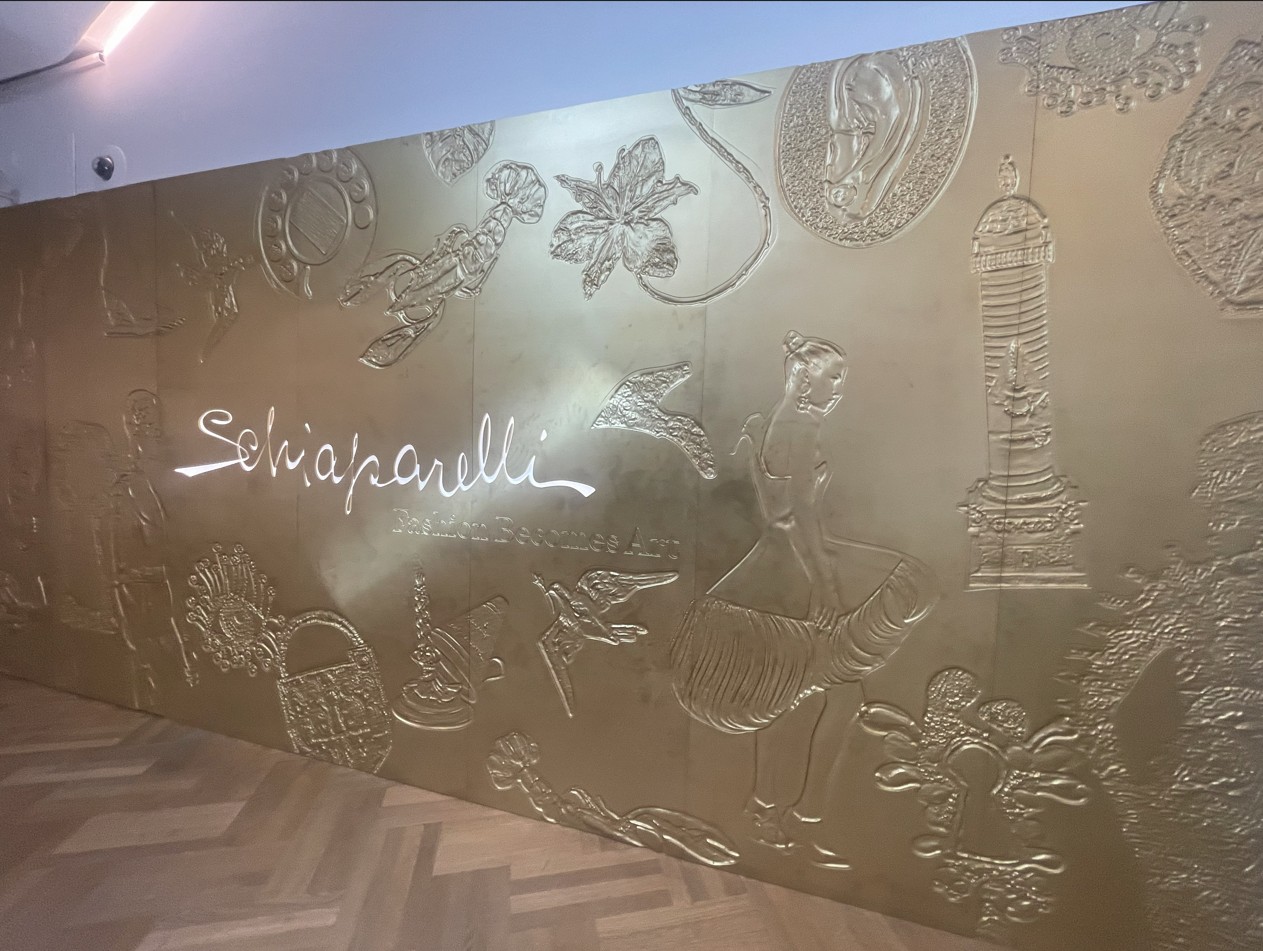
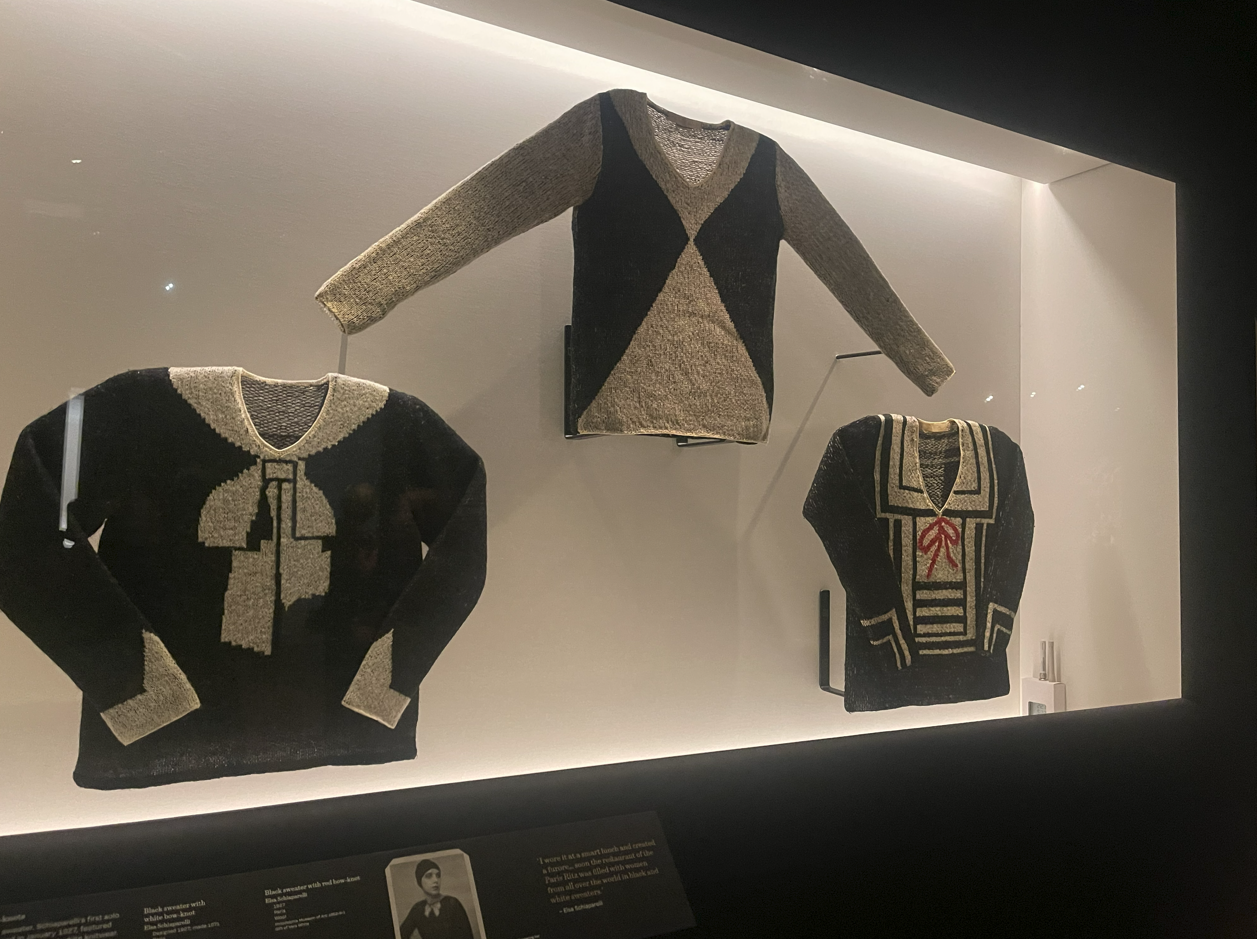
Her couture house, the most discussed of interwar Paris, redefined standards of style and perceptions of beauty in the 20th century. One learns about Schiaparelli’s creative collaborations with artists including Salvador Dalí, Jean Cocteau, Eileen Agar and Leonor Fini, as well as her costumes for stage and screen worn by performers such as Mae West and Zsa Zsa Gabor and independent clients from Peggy Guggenheim to Josephine Baker and Marlene Dietrich to Helena Rubinstein.
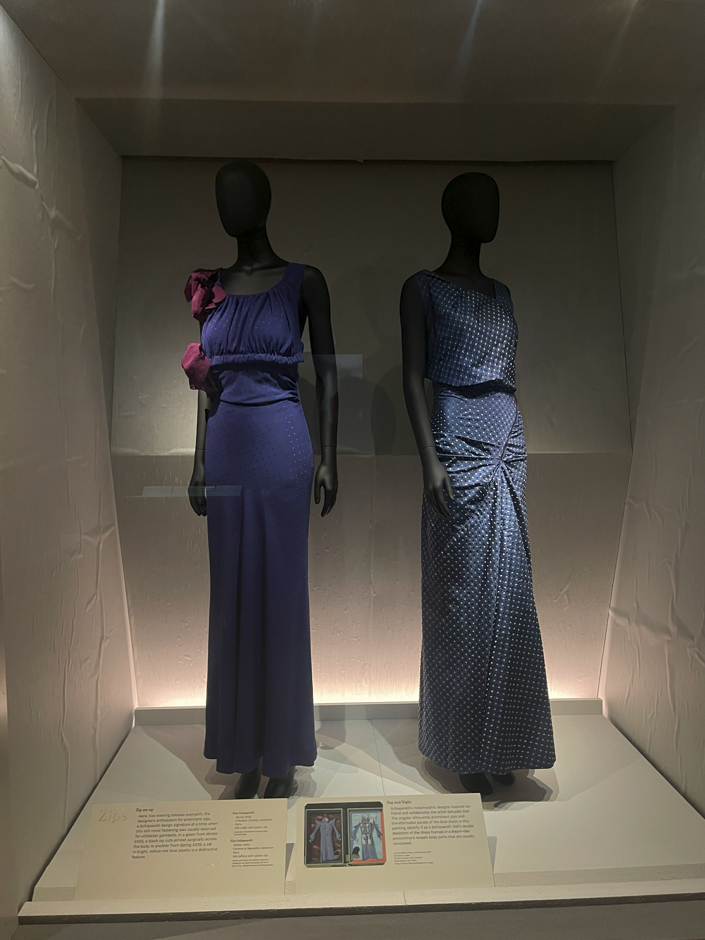
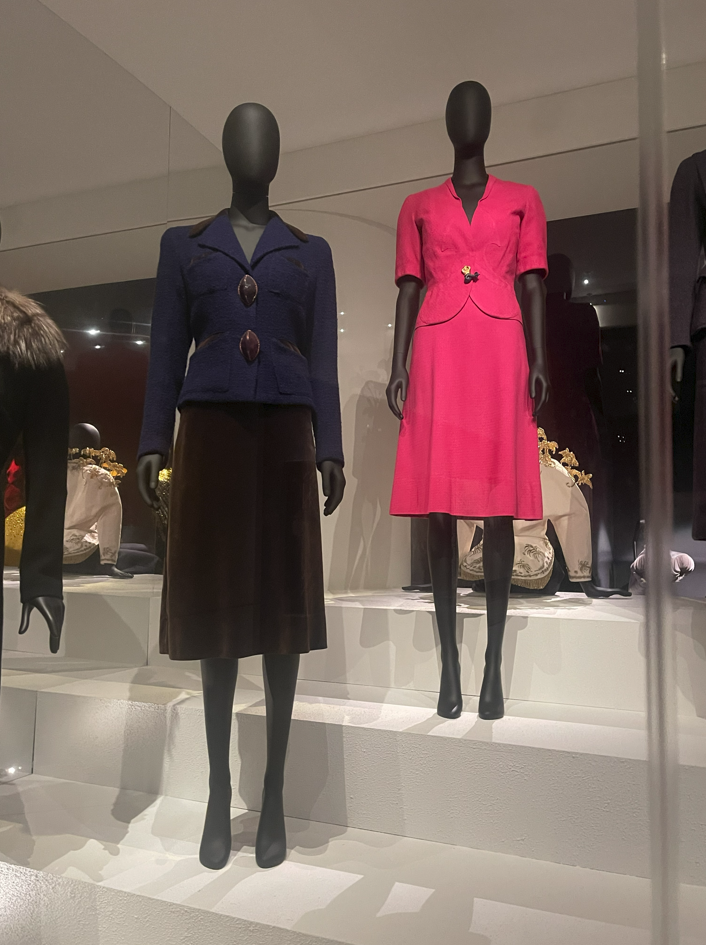
The exhibition explores celebrated, yet little-seen garments, accessories and jewellery from the history of fashion, including objects in the museum’s own collections.
Text Sources:
Design Research Society, VAM, Gazelli Art House, Imperial College
Recommended Posts

Nordic Looms – the craft behind the craft
March 3, 2026

Between experiment, material, and vision
February 24, 2026

Looking back at 2025…
December 19, 2025