

Woven works by Raisa Kabir…

by admin
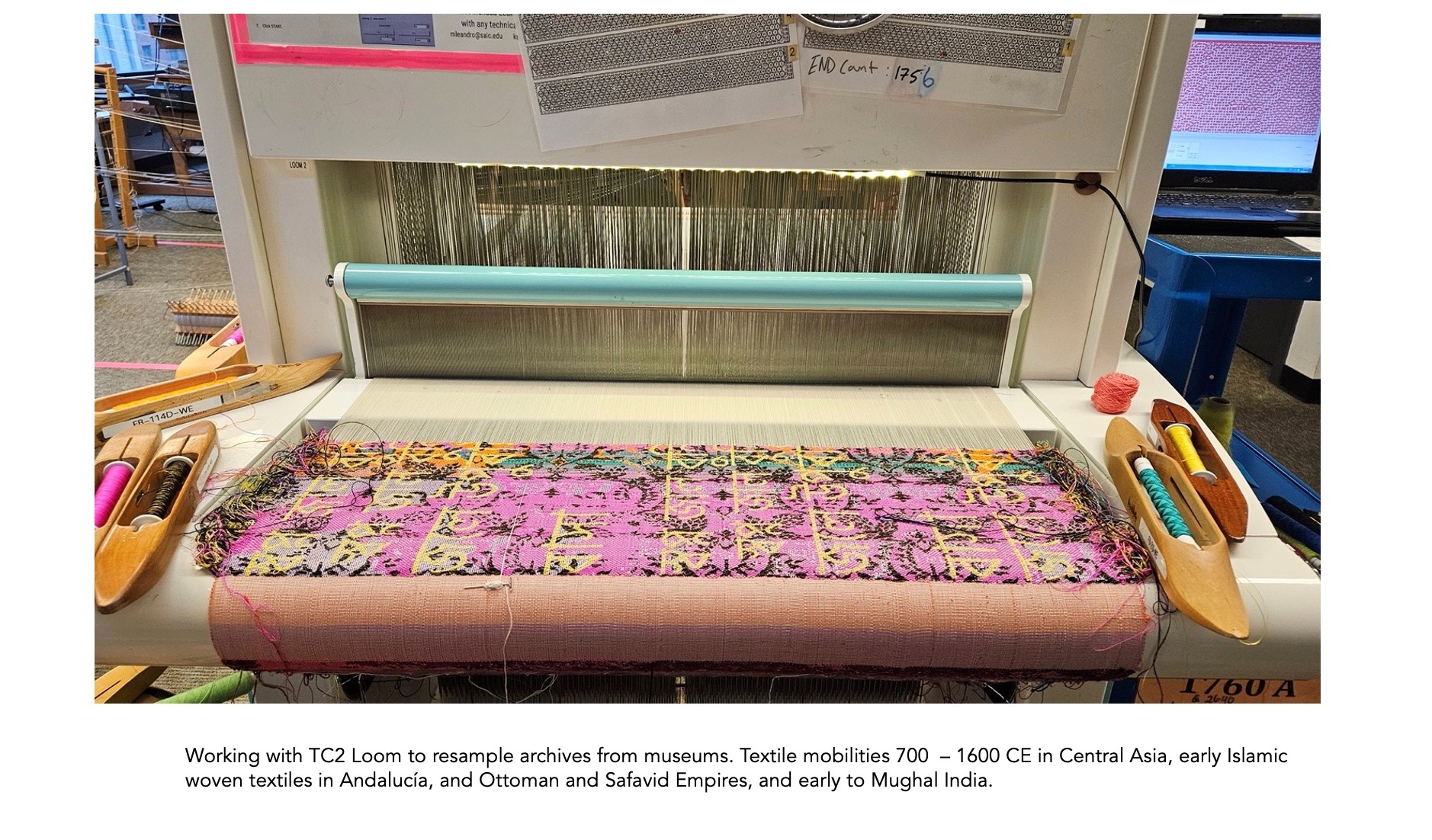
In this issue of the “what’s on your loom” series, we feature the woven works by London-based artist Raisa Kabir. Kabir is a graduate from School Art Institute Chicago (SAIC), USA. She uses woven text/textiles and performance to materialise multiple concepts, concerning the interwoven cultural politics of cloth. Woven works explore the use of textile archives found in museum collections, and re-interpret shared woven technology across regions and groups worldwide. These techniques were shared due to the migration of weavers, the rise and falls of empires, where the mobility of weavers spread the technologies, patterns, motif and language of silk weaving across global cultures and expressed in textile patterns.
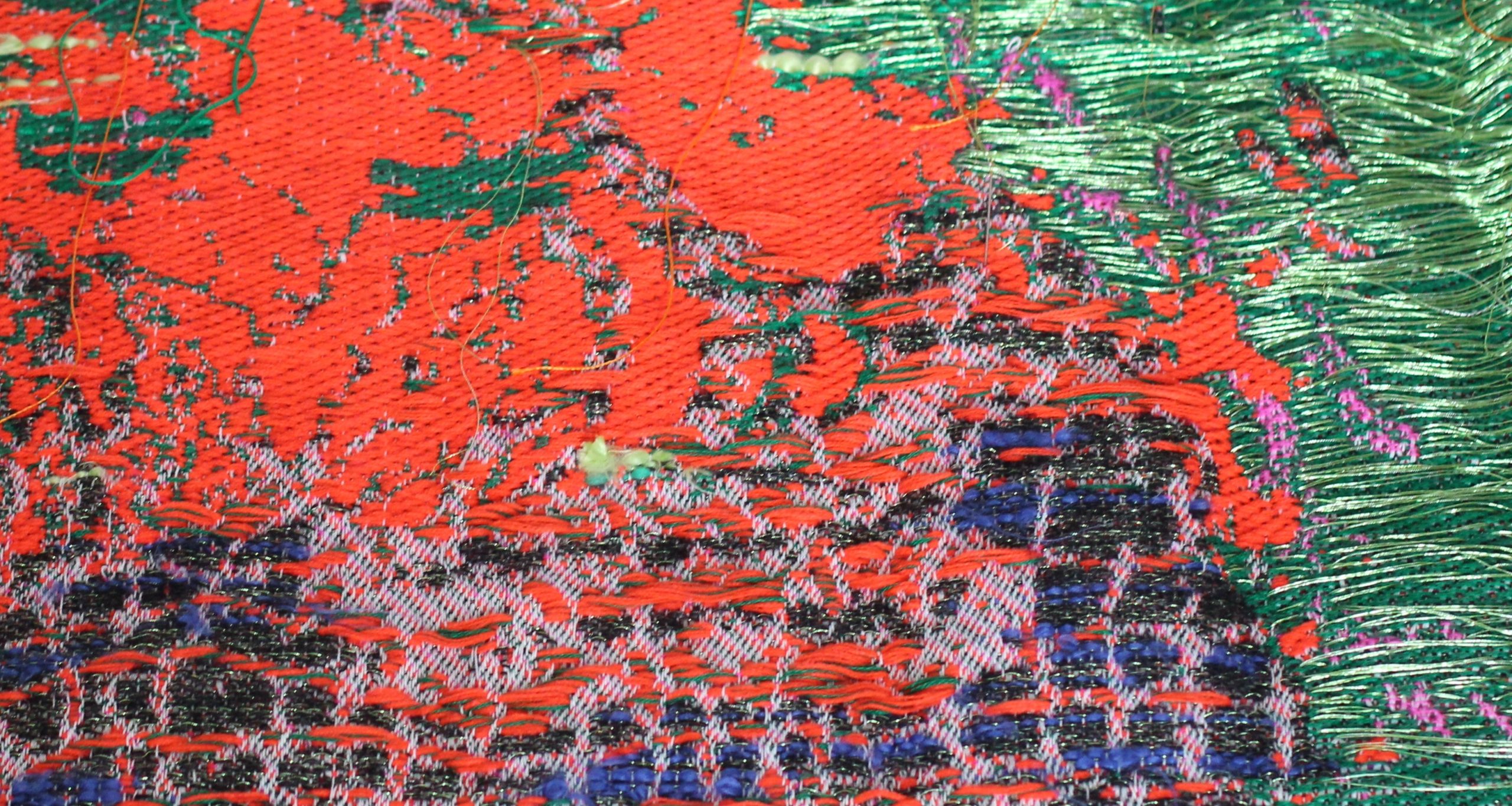
After the Empire Falls (2025)
These TC2 weavings are based on Kabir’s research on global networks of textile technology, design, and cultural heritages to examine the complex relationships between colonialism, labour, and mobilities of techno-cultural exchange that are examined in her practice as a weaver.
As a practice, Kabir uses a material methodology of ‘re-weaving’, which is the process of re-weaving archival research images on digital jacquard looms, and stitching together panels of these re-woven pieces, to produce textile ‘piece-works’ based on ancient textile techniques, such as Lampas, Taquete and Samitum (known as compound weaves) and satellite map data.
Below is a 16th century lampas pattern, noted as French, Italian and Spanish in several books anf archives, but it is highly related to hunting scenes found in safavid and mughal design. Another tiger pattern used in Venetian silk lampas I found through my research it was derived from an 11th Century Egyptian Fatimid and almost is a copy!
-
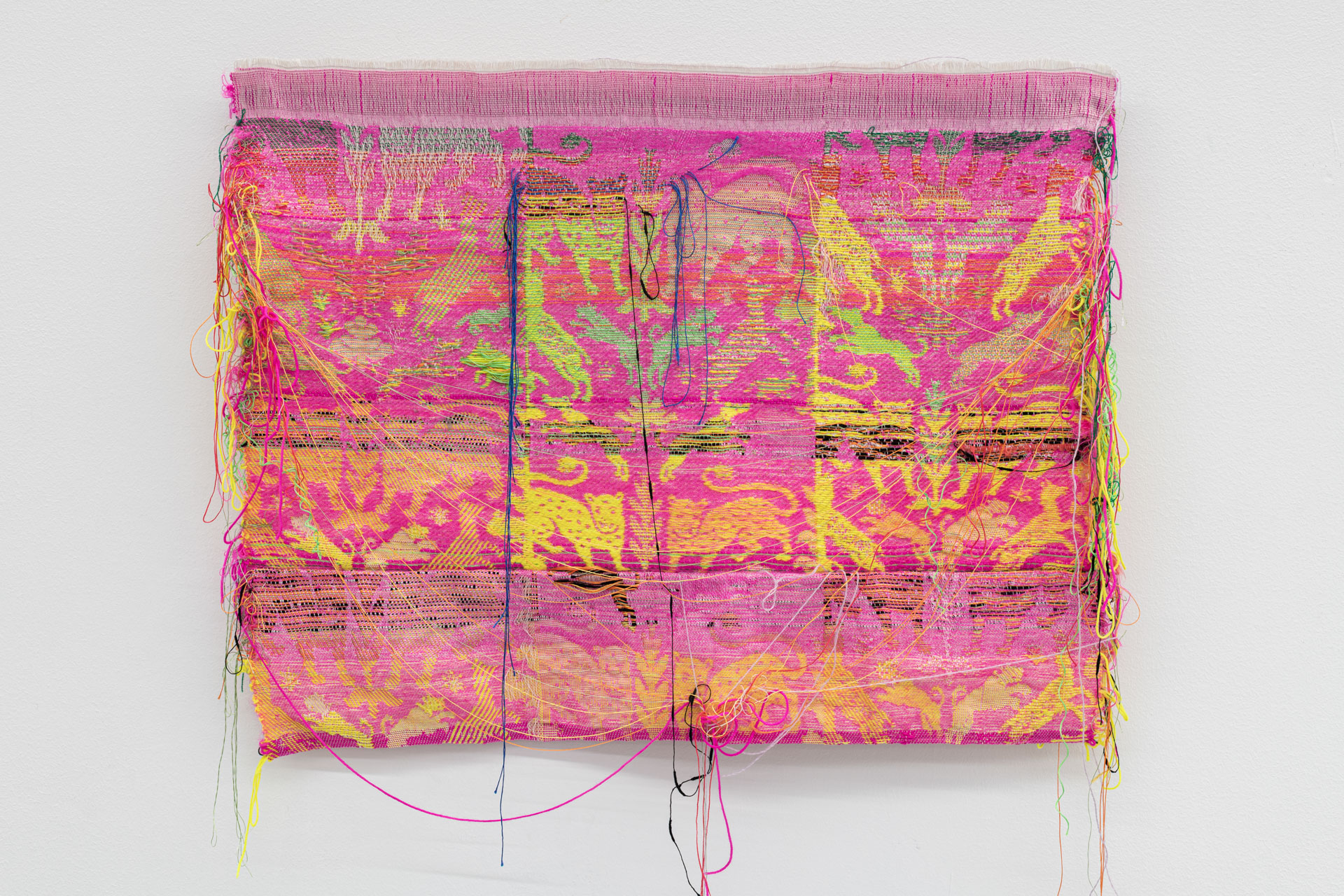
- Noen Compound Histories (2024)
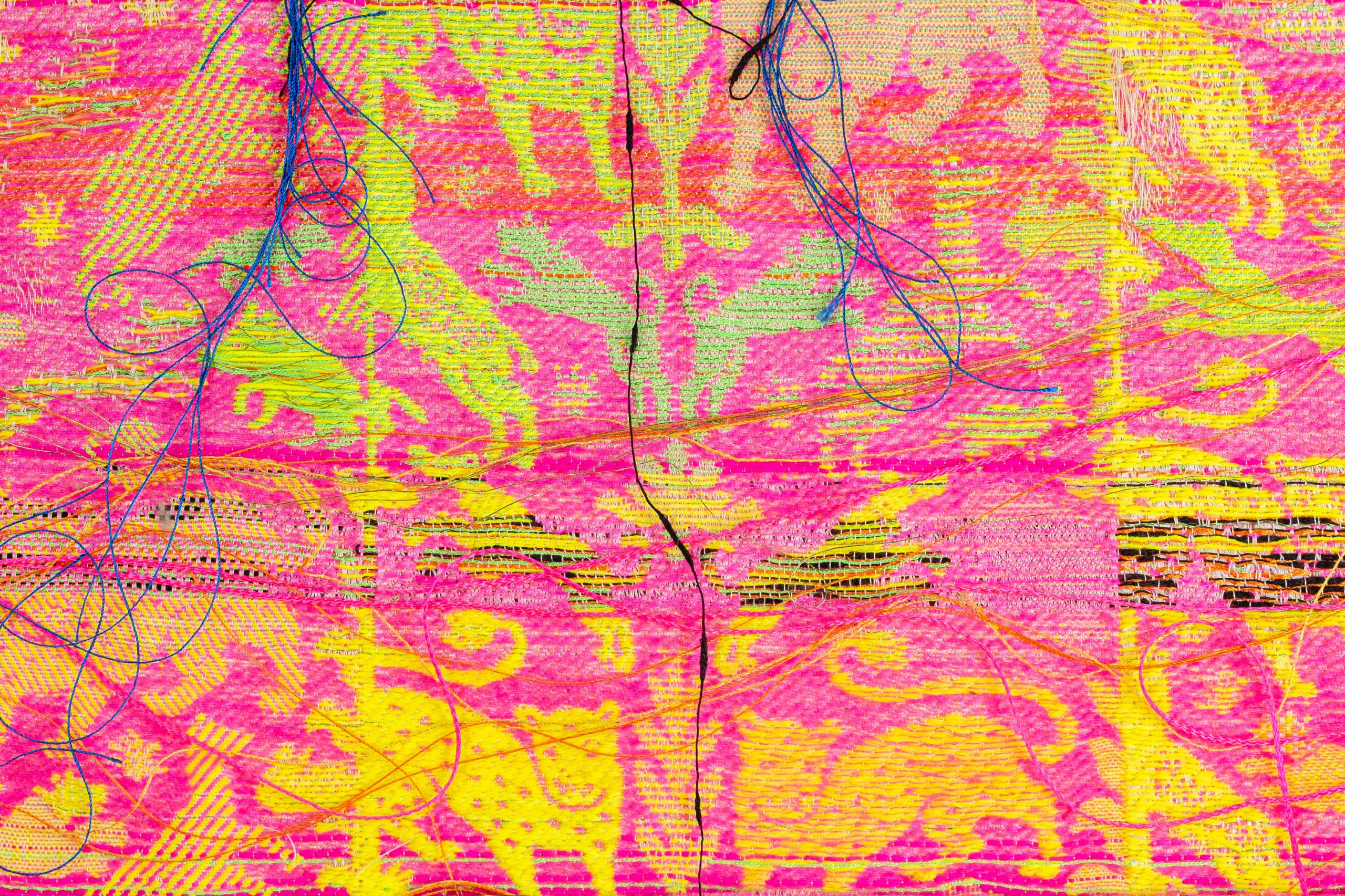
These tapestries are studies of works inspired by textile fragments found in museum collections, often enlarged from microscopic scale. These ‘rewoven’ samples are then hand stitched together, to explore often-overlooked textile histories and textile languages, to connect seemingly disparate histories of labour and technologies together.
-
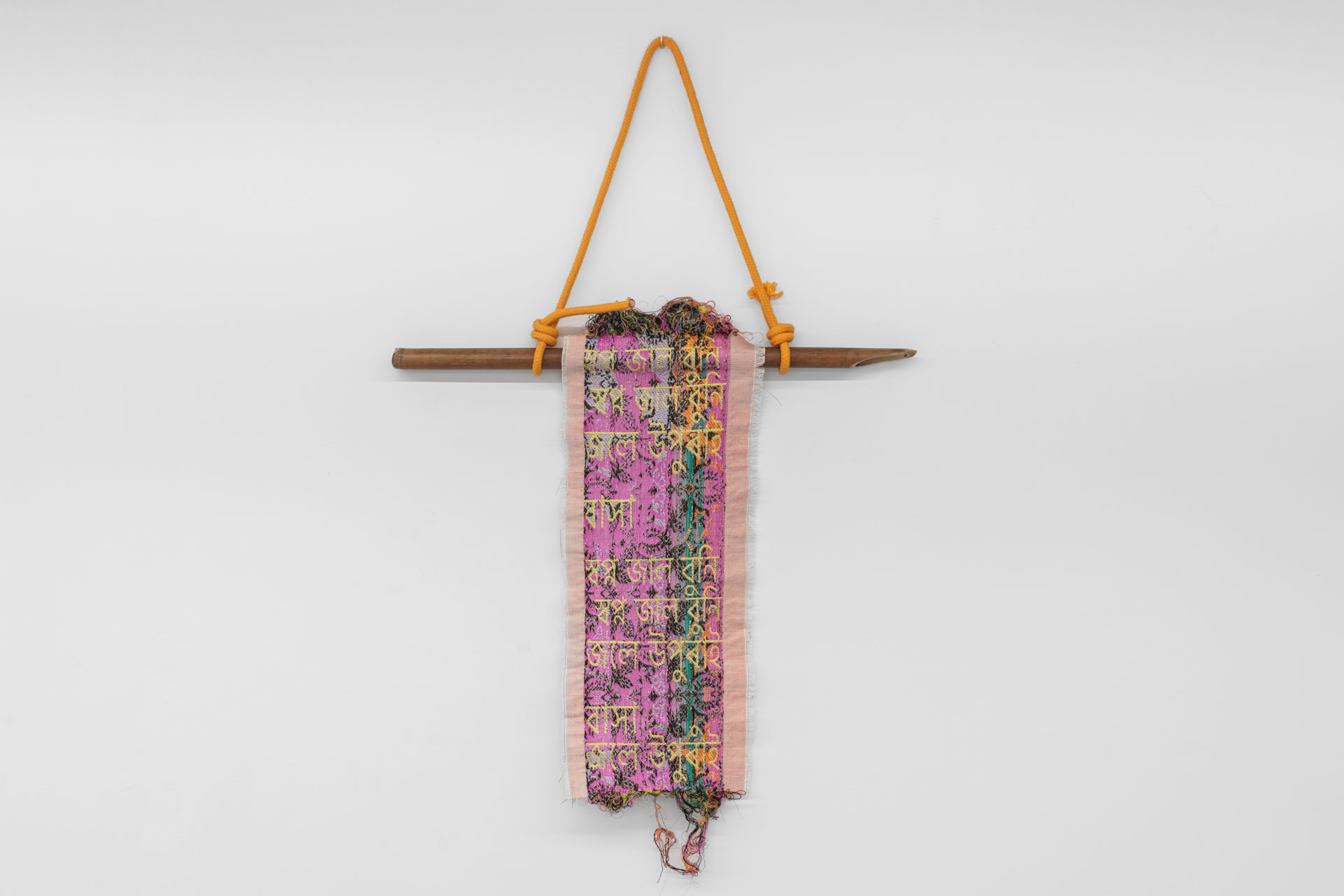
- জলে উপুৰাই বাসা স্বপ্ন জাল বুনি স্বপ্ন নেয়া ভাষী (2024)
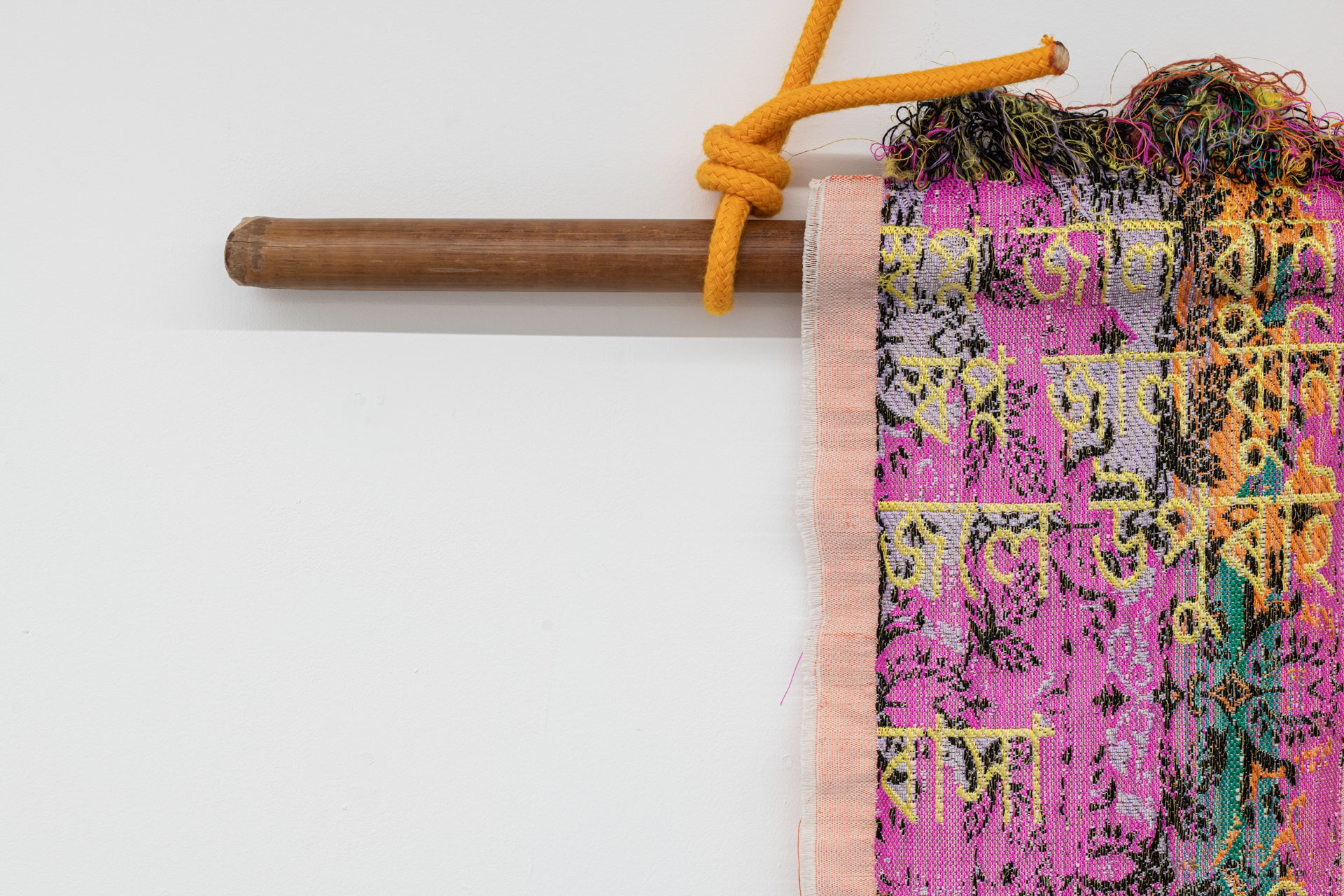
By ‘knitting‘ these histories together by stitching them and zooming into their compound weave structures at microscopic scale, Kabir explores the interconnected histories – compound histories – of global textile material knowledge transfers across time and space, to comment on the notion of multiple locations of collective belonging, found in sites of textile production.
-
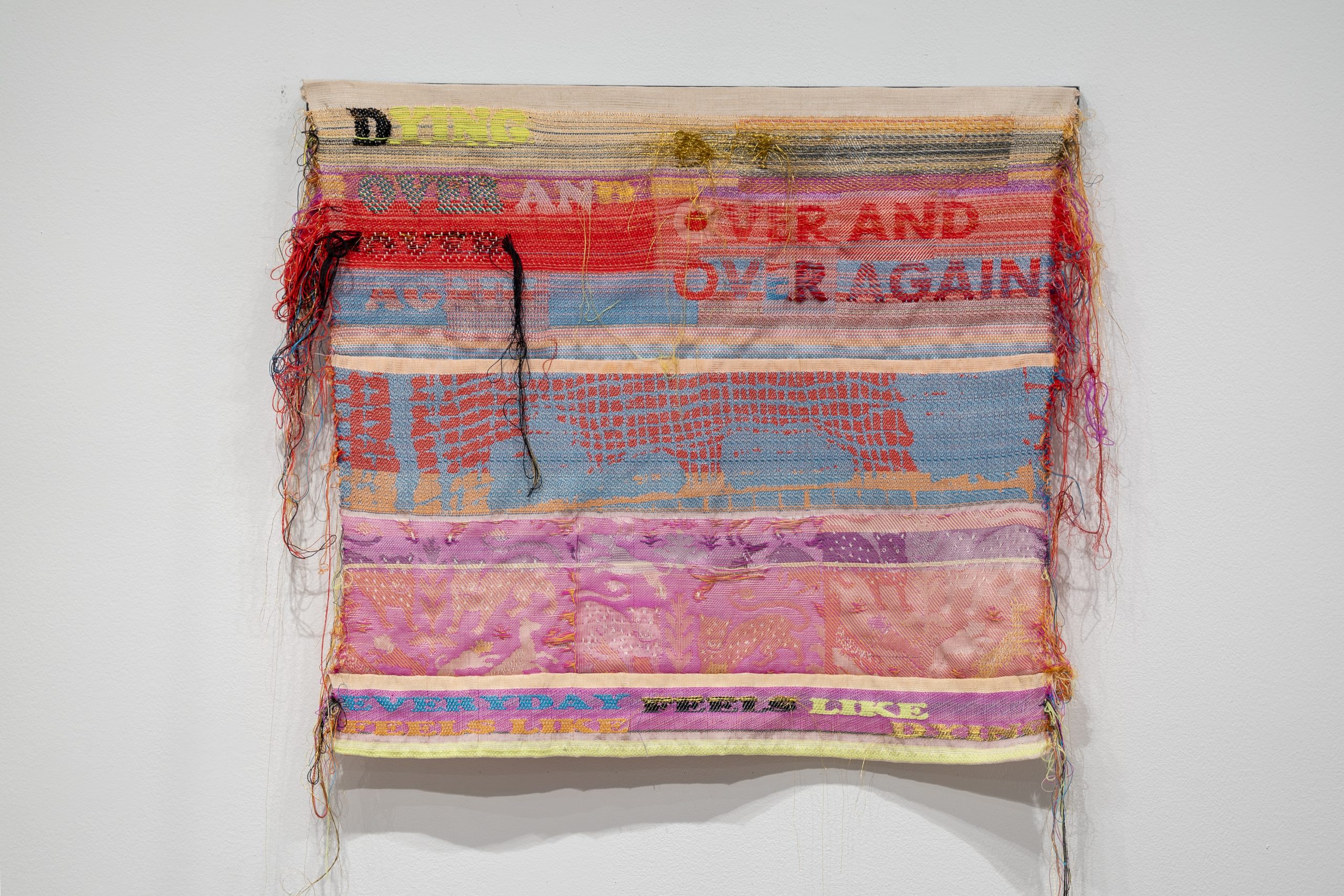
- Over and Over and Over again 2024
-
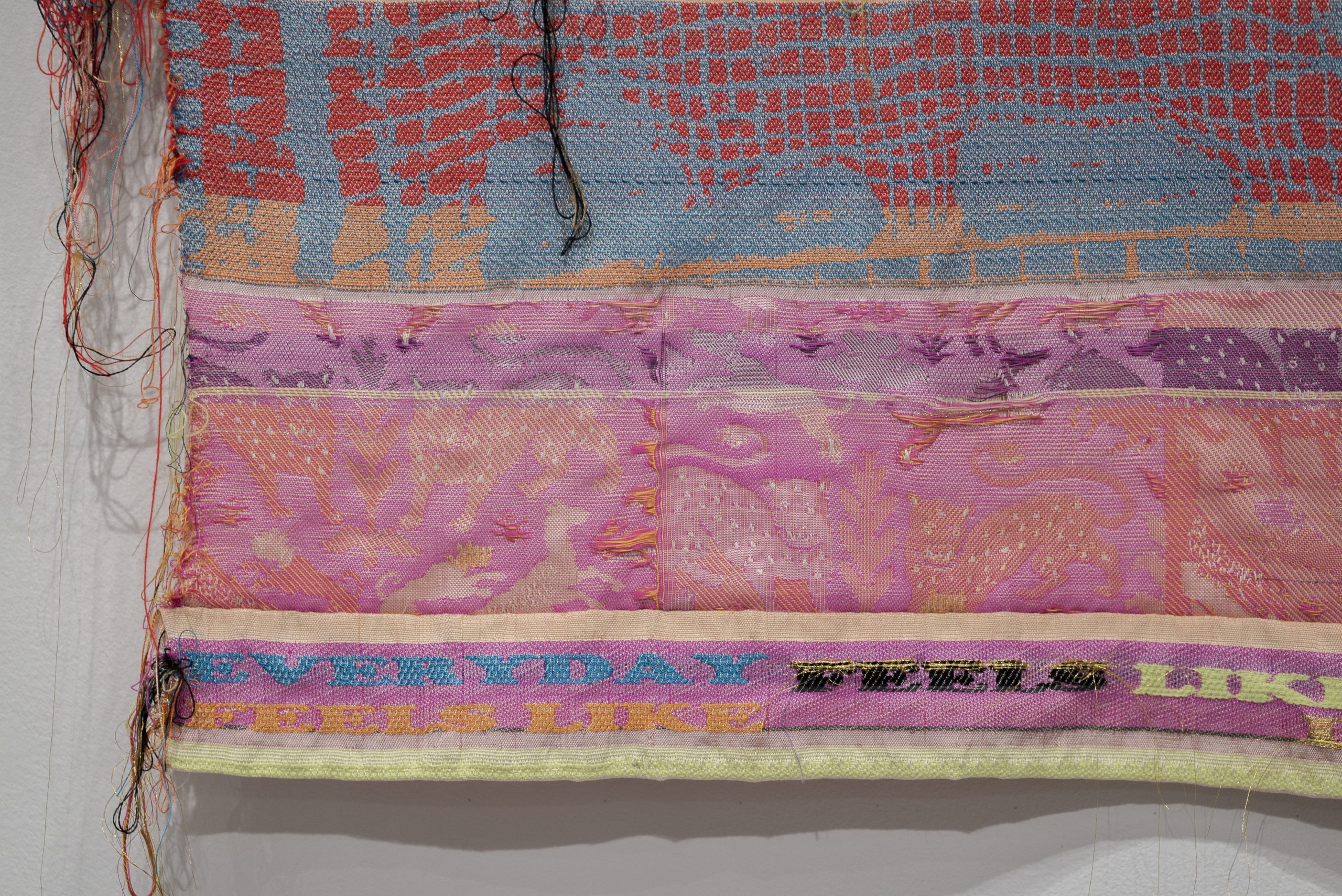
- Hand woven silk, cotton, gold metallic and synthetic yarns
How is weaving Jute a part of the production identity of Dundee as well as Calcutta? How is weaving silk and gold a part of Venetian textile identity as much as Turkey/Iran/China? The works explore the process of stitching and reweaving archival samples together, as a practice of ‘research-making’ that enables new connections to occur between the far-reaching histories of weavers and their movements.
About…
Kabir’s work draws on textile mobilities, nationhood, embodied archives, and geographies of anti-colonial resistance. Kabir’s (un)weaving performances and tapestries use queer entanglement to complicate structures of power, global production/extraction, and to call on the weaving knowledge systems and technologies potential to transform, dream and reimagine the world.
Kabir has exhibited work internationally at The Whitworth, Liverpool Biennial, Whitechapel Gallery, Arnolfini, Australian Design Centre, Asia Art Now Paris, Raven Row, Archive Books Berlin, British Textile Biennial, The Craft Council London, Glasgow International, Ford Foundation Gallery NYC, and the Center for Craft, Creativity, and Design NC.
Kabir has lectured and shared her research at Tate Modern, the V&A, and The Courtauld,
Exhibitions…
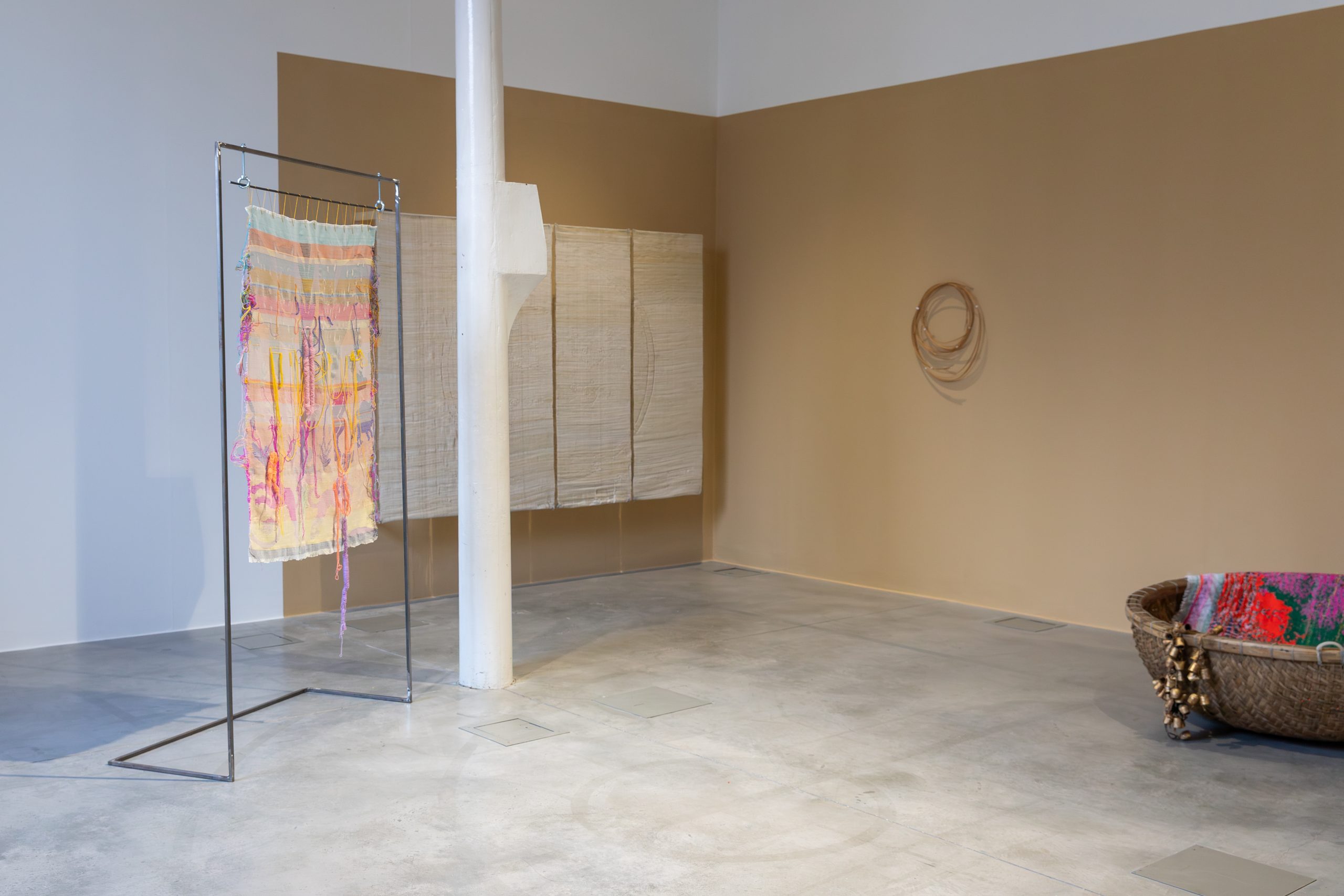
Install view of an exhibition at Aspex Gallery Portsmouth
I Only Dance. I wish we could Sing, Sleaford The Hub, National Centre of Craft and Design, from 28th March – 5th July, 2026
Queer Textures at Primary Nottingham, from 24th April to 18th July, 2026
Links…
Recommended Posts
Handwoven book cloth by LMRM Chicago
March 13, 2026

Woven works by Jaron Smedes van den Berg
March 3, 2026

Breathing Looms by Hella Jongerius
May 20, 2025